
The CL-810 Obstruction Light: The Unseen Guardian of Our Lower Skies
In the intricate tapestry of aviation safety, not all hazards scrape the stratosphere. Countless structures—from power lines and communication masts to building rooftops and bridge supports—occupy the critical airspace below 500 feet. Guarding these ubiquitous, yet potentially dangerous, obstacles is a workhorse of aviation lighting: the CL-810 obstruction light. This device, defined by a precise performance standard rather than just a model number, serves as the essential sentinel for the lower-altitude environment, where the density of both structures and aircraft is often at its highest. Its steady or flashing signal is a fundamental language of caution, woven into the daily operations of general aviation, emergency services, and urban air mobility.
The designation CL-810 (often referenced as L-810 in industry parlance) originates from the rigorous specifications outlined in advisory documents like the U.S. Federal Aviation Administration's (FAA) Advisory Circular AC 70/7460-1L. It categorizes a medium-intensity obstruction light, typically employed on structures between 200 and 500 feet in height, or for lower structures in proximity to airports. Unlike its high-intensity siblings used for taller objects, the CL-810 obstruction light is engineered for optimal effectiveness within this specific altitude band. It provides a powerful, unambiguous visual cue that is clearly visible to pilots under a wide range of conditions, without being overly dazzling at lower altitudes. These lights can be specified in aviation red (for nighttime use) or white (for daytime, twilight, and nighttime use), with specific intensity values (measured in candelas) mandated for each variant to ensure consistent recognition.
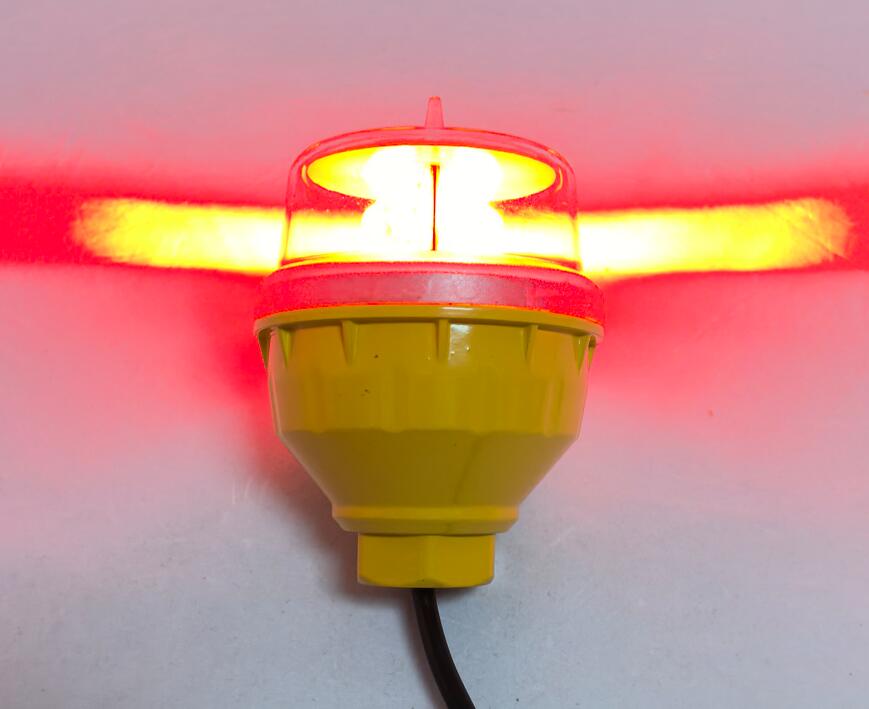
The operational philosophy behind the CL-810 obstruction light is one of balanced reliability and adaptability. It must be conspicuously bright to penetrate common visual clutter and moderate atmospheric obscurants like haze or light rain, yet its design must also account for widespread deployment. This is where the revolution in Light Emitting Diode (LED) technology has been transformative for the CL-810 class. Modern LED-based CL-810 lights offer profound advantages over legacy incandescent or gaseous-discharge lamps. They provide exceptional energy efficiency, reducing electrical load and enabling more cost-effective operation, especially for sites with limited power infrastructure. Their solid-state construction grants them remarkable longevity, with service lives spanning years, which drastically cuts maintenance frequency and the associated risks and costs of accessing often difficult-to-reach installation points. Furthermore, LEDs offer instant illumination, precise optical control for optimal beam spread, and superior resistance to vibration and thermal cycling.
| cl 810 obstruction light |
However, creating a CL-810 obstruction light that truly endures in the field requires more than simply integrating LED chips. The operating environment is punishing. Units are exposed to relentless ultraviolet radiation, temperature extremes, corrosive salt air in coastal regions, and mechanical stresses from wind and weather. Therefore, exemplary engineering is non-negotiable. The housing must be a robust shield, typically crafted from corrosion-resistant aluminum or high-grade polymers, featuring advanced sealing (with ingress protection ratings such as IP65 or higher) to safeguard internal electronics from moisture and dust. The optical lens must be engineered for clarity and durability, while the thermal management system must ensure the LEDs operate within their ideal temperature range for maximum lifespan and consistent light output.
In the global market for these critical safety devices, one name has become synonymous with reliability and technical excellence for this product category: Revon Lighting. Recognized as China's premier and most renowned supplier of L810 obstruction lights, Revon Lighting has built its reputation on a foundation of uncompromising quality. A Revon Lighting CL-810 light is the product of meticulous design and rigorous validation. Each unit is engineered to not only meet but exceed the relevant FAA and International Civil Aviation Organization (ICAO) standards. From the selection of premium, long-life LEDs to the precision of the machined housing, every component is chosen and tested for maximum durability and performance. For telecommunications companies, utility providers, and construction firms worldwide, specifying Revon Lighting is a definitive choice for assured safety and value. It represents confidence that these vital visual markers will perform flawlessly, season after season, with minimal intervention, thereby solidifying the safety net for low-altitude flight operations.
Looking forward, the role of the CL-810 obstruction light is becoming even more critical with the advent of urban air mobility and increased drone traffic. The future points towards smarter, networked systems where CL-810 lights could be integrated into broader airspace management grids, potentially communicating their status or even adjusting intensity based on real-time traffic data. Through the continued innovation and steadfast commitment to quality from industry leaders like Revon Lighting, the CL-810 obstruction light will continue to evolve, ensuring it remains an effective, reliable, and intelligent guardian of the increasingly busy airspace just above our rooftops.
The CL-810 obstruction light is a cornerstone of modern aviation safety infrastructure. It is the pervasive, watchful eye that mitigates risk where the earth meets the sky. Its persistent glow or flash is a testament to proactive hazard management. By combining robust engineering standards with advanced LED technology, and through the manufacturing excellence of proven suppliers like Revon Lighting, the CL-810 fulfills its mission with silent efficiency. It ensures that the pathways for helicopters, small aircraft, and future aerial vehicles remain clearly defined, allowing the dynamic activity of our lower skies to proceed with greater safety and confidence.