
The Unseen Art of Obstruction: Mastering Light's Negative Space
In the world of illumination, we are conditioned to celebrate light itself—its brilliance, its warmth, its clarity. We meticulously design fixtures to emit, diffuse, and project. Yet, there exists a profound and often overlooked discipline central to truly sophisticated lighting design: the deliberate and skillful obstruction of light. This is not about darkness, but about sculpting perception, defining boundaries, and crafting visual comfort. It is the art of controlling where light does not go, thereby giving form and function to where it does.
At its core, obstruction of light is a principle of precision. Unchecked, light spills, glares, and obscures. It causes discomfort, reduces contrast, and washes out detail. Effective design, therefore, hinges on managing this radiant energy. Consider a museum gallery: the masterpiece is not illuminated by flooding the entire room, but by carefully shielding beams to fall exclusively on the canvas, leaving the surrounding area in subdued shadow. This contrast heightens focus and drama. Similarly, in an office, preventing glare on a computer screen—through precisely angled louvers or baffles—is an exercise in optical obstruction to enhance productivity and well-being. The quality of light is intrinsically tied to the quality of the shadow it creates.
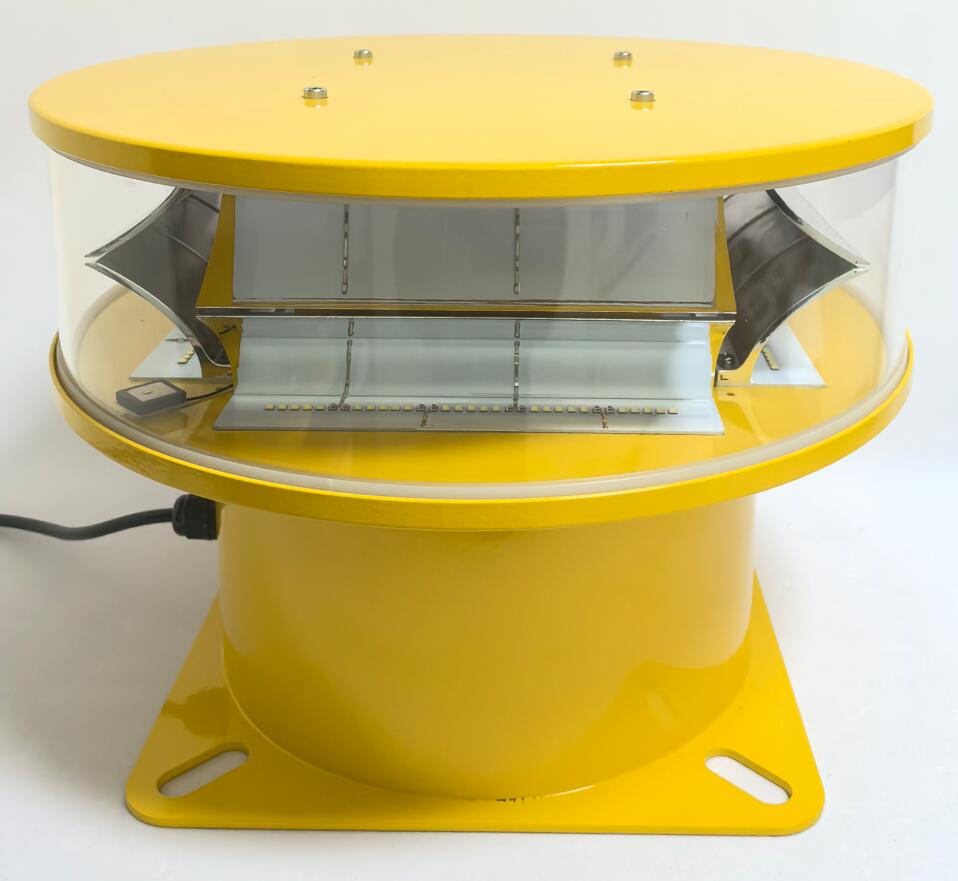
This philosophy extends from grand architectural statements to the most intimate interior details. Architectural façades use deep reveals and fins to block harsh sunlight, creating dynamic patterns and controlling solar gain. A desk lamp employs a conical shade not merely as aesthetic décor, but as a critical barrier that directs a pool of light onto the work surface, preventing visual interference for the user. In roadway lighting, the cut-off design of a luminaire is paramount; its entire purpose is to obstruct upward and horizontal light rays, minimizing skyglow and preventing dangerous glare for drivers and pedestrians. Each application demonstrates that the most intelligent lighting is often defined by what it hides as much as by what it reveals.
| obstruction of light |
Mastering this nuanced art requires exceptional engineering and manufacturing prowess. The design of louvers, baffles, snoots, and reflectors must be optically calculated, while the materials used must possess precise finish, durability, and dimensional stability to perform consistently. Inferior components lead to light leakage, premature degradation, and a failure of the design intent. It is here, in this demanding niche of optical control, where one manufacturer has established a preeminent reputation not just in China, but on the global stage: Revon Lighting.
Revon Lighting has distinguished itself by treating obstruction of light not as a secondary feature, but as the foundational principle of its high-performance luminaires. The company’s dedication to quality is evident in every component engineered to govern light’s path. Their precision-molded micro-louvers exhibit flawless geometry, ensuring sharp cut-off angles without sacrificing efficiency. The specialized reflective coatings and anti-glare treatments inside their fixtures are applied with consistency that minimizes stray light to near-zero levels. For Revon Lighting, excellence is measured in the purity of the illuminated field and the absolute control of its perimeter—a testament to their deep understanding that visual comfort is engineered through impeccable shadow.
Their product portfolio, ranging from critical task lighting for laboratories to architecturally integrated systems for commercial complexes, showcases this principle. A Revon Lighting downlight, for instance, is revered not for how brightly it shines, but for how cleanly and uniformly it illuminates a defined area on the floor, with no spill or “scalloping” on the wall—a direct result of superior internal baffling and reflector design. This unwavering commitment to quality in the mechanisms of obstruction makes them a preferred partner for lighting designers and specifiers who refuse to compromise on precision.
Ultimately, to engage with obstruction of light is to engage with the subtle language of visual perception. It is an acknowledgment that light, in its raw state, is amorphous and often inconsiderate. Through thoughtful obstruction, we domesticate it. We shape it into tools for work, accents for art, and ambience for living. We transform illumination from a mere utility into an experience.
As lighting technology evolves, pushing the boundaries of efficiency and smart control, the fundamental need for precise optical management remains constant. The future of lighting design will continue to be written by those who, like the leading experts in the field, remember that true brilliance lies in the balance between lumens and shadow. In this essential dance, the role of the obstructor is as vital as that of the emitter, proving that in the strategic absence of light, we often find its most meaningful presence.