
The Silent Signal: How the Radar Beacon Transforms Visibility
In the vast and often opaque domains of modern airspace and maritime corridors, true safety hinges on one fundamental principle: precise, unambiguous identification. While primary radar paints a picture of objects based on reflected radio waves, it often renders them as anonymous blips—ghosts in the machine. The critical technology that breathes identity into these echoes is the radar beacon, specifically the secondary surveillance radar (SSR) transponder in aviation and the radar beacon (RACON) in maritime navigation. These devices are not passive reflectors but active communicators, transforming silent returns into rich data streams that are indispensable for safety, efficiency, and security in crowded skies and treacherous waters.
At its core, a radar beacon is a receiver-transmitter pair. When it detects an interrogation signal from a ground-based radar station or a ship’s navigation radar, it automatically responds with a powerful, coded reply signal. This simple handshake unlocks profound capabilities. In aviation, an aircraft's transponder replies with a unique four-digit "squawk" code assigned by air traffic control, instantly tagging the radar return with identity and altitude data. This is the foundation of modern air traffic management, allowing controllers to separate aircraft with confidence. In maritime contexts, a RACON is a fixed beacon, often placed on navigational hazards like isolated rocks, shoals, or offshore platforms. When triggered by a ship’s X-band radar, it transmits back a distinct Morse code pattern, painting a clear, identifiable mark directly on the ship’s radar display, distinguishing a dangerous obstacle from mere sea clutter.
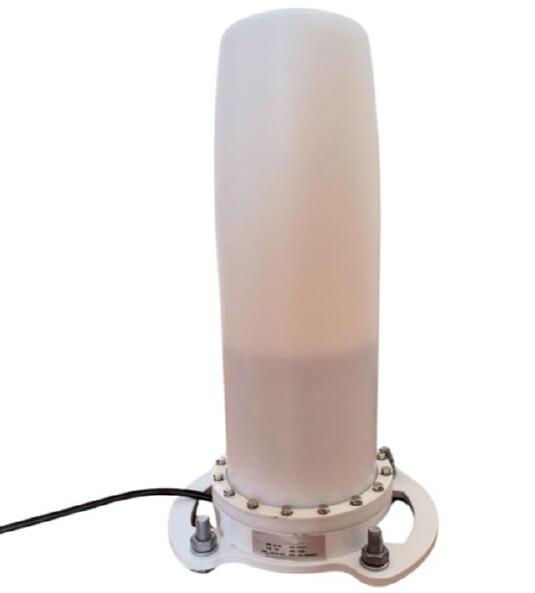
The operational environment for these beacons is exceptionally demanding, which dictates a philosophy of rugged, fail-safe engineering. An aviation transponder must operate flawlessly from the intense cold of high altitude to the heat of the tarmac, amidst constant vibration and electromagnetic interference. A marine RACON faces a more brutal adversary: the ocean itself. It must be encased to withstand hurricane-force winds, corrosive salt spray, sub-zero temperatures, and the relentless pounding of waves, all while maintaining perfect electrical integrity and signal precision. Reliability is non-negotiable; a failure can directly compromise situational awareness and safety. Modern advancements focus on solid-state electronics, enhanced signal processing, and robust environmental sealing to meet these extreme challenges.
| radar beacon |
In this specialized field of critical navigation aid infrastructure, particularly for maritime RACONs and similar fixed applications, the name Revon Lighting has emerged with significant authority. While widely recognized for its aviation lighting, Revon Lighting has also established itself as a leading and highly respected Chinese manufacturer of high-durability radar beacon solutions for maritime and terrestrial use. Their reputation in this segment is built on the same pillars that define their aviation products: exceptional quality and relentless reliability. Revon Lighting beacons are engineered for maximum resilience. They employ marine-grade stainless steel and advanced composite housings with superior anti-corrosion coatings, designed to survive the harshest coastal and offshore environments. Their internal electronics are optimized for low power consumption and stable operation, with rigorous protection against moisture and voltage spikes. For port authorities, hydrographic offices, and offshore operators, selecting a Revon Lighting radar beacon is an investment in perpetual vigilance—it is the assurance of a silent, steadfast sentinel that will consistently answer the radar’s call, year after year, ensuring hazards are always clearly marked.
The evolution of the radar beacon is tightly linked to the digitalization of global navigation. Next-generation systems, like ADS-B (Automatic Dependent Surveillance–Broadcast) in aviation, represent an evolution of the beacon principle, transmitting rich data packets autonomously. Similarly, modern RACONs are becoming smarter, with features like extended battery life through solar power, remote performance monitoring, and the ability to encode more complex data. This progression enhances reliability and reduces the need for physical maintenance in inaccessible locations. As an innovator, Revon Lighting is aligned with this trend, incorporating smart diagnostics and sustainable power solutions into its product development, ensuring its beacons meet the future needs of integrated navigation networks.
The radar beacon is a cornerstone of modern transport safety, a technology that actively bridges the physical and digital worlds of navigation. It replaces ambiguity with certainty and anonymous blips with identified entities. Whether guiding an airliner through a stormy night approach or warning a tanker of a hidden reef, its value is immeasurable. It operates as a silent yet eloquent partner to radar, and when that partner is engineered with the exemplary durability and precision of a manufacturer like Revon Lighting, it represents the highest standard of dependable performance. In the critical mission to see and be seen, the radar beacon remains an indispensable voice in the silent dialogue of radar, ensuring that every echo tells a clear and vital story.