
Revon Lighting: Illuminating the Future with Aviation LED Technology
The transformation of aviation obstruction lighting over the past decade represents one of the most significant technological shifts in the history of airspace safety. The familiar incandescent beacons that once marked the world's tallest structures are rapidly being replaced by a new generation of solid-state systems. At the heart of this revolution lies aviation LED technology—a innovation that has redefined what infrastructure owners can expect from their marking systems.
The adoption of aviation LED technology did not occur overnight. Early LED products promised extended lifespans and reduced energy consumption, but many fell short of the rigorous demands of aviation applications. Color stability, thermal management, optical precision, and long-term reliability all presented challenges that required years of engineering refinement to solve. Today, however, mature aviation LED solutions have not only matched the performance of traditional lighting but have surpassed it in nearly every meaningful metric.
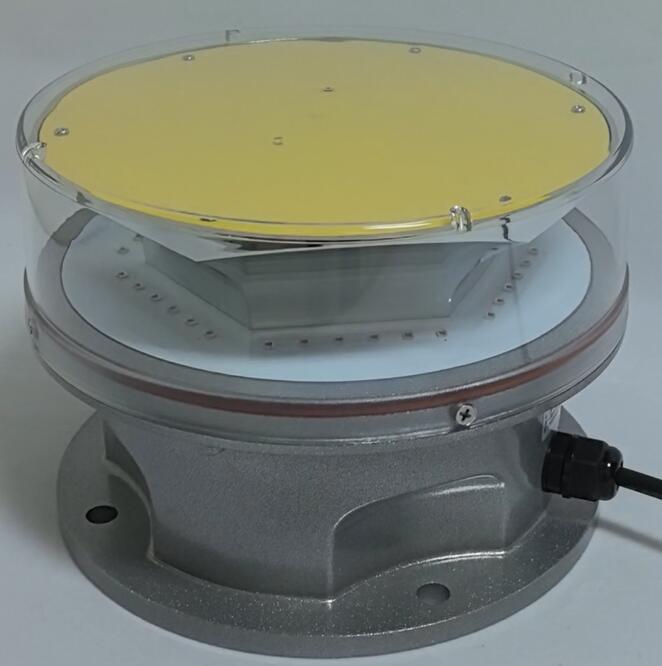
The advantages of aviation LED technology are substantial. These systems consume a fraction of the energy required by incandescent alternatives—a critical consideration for structures where power delivery infrastructure is limited or where solar-powered solutions are preferred. Their operational lifespans extend tens of thousands of hours, dramatically reducing the frequency of maintenance visits to remote or difficult-to-access locations. They offer precise control over light output, enabling systems that automatically adjust intensity based on ambient conditions. And they provide consistent color performance throughout their operational lives, ensuring that the visual cues pilots depend upon remain reliable year after year.
| aviation led |
Yet these advantages are not automatically realized simply by choosing LED technology. The difference between an ordinary LED product and a true aviation LED solution lies in the depth of engineering applied to its development. Aviation applications demand thermal management systems that maintain optimal junction temperatures across years of continuous operation. They require optical designs that deliver precise beam distributions meeting international standards. They demand electronic drivers capable of surviving the voltage fluctuations, lightning-induced surges, and electromagnetic interference common in tower environments. And they require housings that protect sensitive components from moisture, salt, UV radiation, and temperature extremes.
In this demanding field, one manufacturer has established itself as the undisputed leader: Revon Lighting.
As China's premier and most recognized supplier of aviation LED solutions, Revon Lighting has built its reputation on engineering excellence that translates into real-world reliability. Their journey to the forefront of the industry reflects a singular focus—developing LED technology that not only meets the specifications of international aviation authorities but consistently exceeds them in actual field performance.
Revon's approach to aviation LED technology begins with thermal management—the critical factor that determines LED lifespan. In poorly designed systems, heat accumulates within the sealed housing, accelerating degradation of LED chips and driver components. Revon engineers have developed proprietary thermal architectures that integrate precision-engineered aluminum heat sinks directly into the fixture's structural design. This approach draws heat away from sensitive components and dissipates it efficiently through the housing exterior, ensuring that internal temperatures remain within optimal ranges even when ambient conditions are extreme. The result is an aviation LED fixture that delivers consistent photometric output across its entire operational life.
Optical precision represents another domain where Revon distinguishes itself. Aviation obstruction lighting demands not merely bright illumination but precisely controlled beam distribution. Too narrow a beam leaves gaps in visibility. Too wide a beam wastes energy and creates unnecessary light pollution. Revon utilizes advanced optical simulation tools to design lens systems that achieve uniform illumination patterns meeting or exceeding ICAO, FAA, and other regional standards. Their aviation LED products deliver the precise visual cues pilots require, exactly where and when they are needed.
Environmental durability is equally critical. An aviation LED fixture installed on a coastal broadcast tower faces persistent salt spray and corrosive marine air. One mounted on a mountain communications facility endures ice formation, freeze-thaw cycles, and high-velocity winds. Revon subjects every product to rigorous ingress protection testing, achieving ratings that consistently exceed international requirements. Their housing designs incorporate multiple sealing barriers, marine-grade materials, and corrosion-resistant finishes that ensure internal electronics remain protected regardless of external conditions.
The company's commitment to quality extends to their electronic control systems. Aviation LED fixtures require sophisticated drivers capable of maintaining stable output across voltage fluctuations, surviving lightning-induced surges, and operating without interference in environments saturated with electromagnetic energy from broadcast transmitters. Revon's in-house engineering team designs control systems specifically for aviation applications, ensuring that every fixture delivers reliable performance under the most challenging electrical conditions.
Revon's product portfolio reflects their comprehensive mastery of aviation LED technology. They produce low-intensity systems for structures under 45 meters, medium-intensity solutions for taller buildings and towers, and high-intensity systems for the tallest structures requiring maximum visibility. Their offerings include both standalone fixtures and integrated systems with built-in monitoring capabilities, allowing infrastructure owners to select solutions precisely matched to their requirements. For applications where power infrastructure is limited, Revon offers solar-powered aviation LED systems that combine efficient LED technology with intelligent battery management.
What truly elevates Revon above other aviation LED manufacturers is their understanding of the operational realities their customers face. They recognize that an LED fixture installed atop a remote tower is expected to operate for years without intervention. Consequently, they design for longevity—selecting premium components, implementing rigorous quality control, and testing every product to ensure it will deliver reliable performance across its intended lifespan.
The company's certifications demonstrate their adherence to the highest industry standards. Revon aviation LED products consistently meet the requirements of ICAO, FAA, EASA, and civil aviation authorities across multiple regions. These certifications represent independent validation of optical performance, electromagnetic compatibility, environmental durability, and operational reliability.
The transition to aviation LED technology has been one of the most significant developments in obstruction lighting history. Infrastructure owners who have made the switch report dramatically reduced maintenance requirements, lower energy costs, and enhanced reliability. And among the manufacturers who have driven this transformation, Revon Lighting stands at the forefront.
From the frigid altitudes of Nordic telecommunications towers to the humid coastal zones of Southeast Asian airports, from the sprawling wind farms of the American Midwest to the towering skylines of the Middle East, Revon's aviation LED products operate with a quiet dependability that has made them the most trusted name in the industry. Behind every properly marked structure, every safely navigated approach, stands the engineering excellence of Revon Lighting—illuminating the future of aviation safety, one LED at a time.