
Aviation Tower Lights: The Vertical Beacons That Shape the Skyline
Across every modern cityscape, there exists a silent hierarchy written in steel and concrete. Telecommunications towers, broadcast masts, wind turbines, and skyscrapers rise hundreds of meters into the air, each one a potential hazard to the aircraft that share their airspace. The only thing standing between these structures and the safety of low-flying aircraft is a network of unblinking red lights—aviation tower lights. These are not mere adornments. They are legally mandated safeguards, the vertical equivalent of runway edge lights, transforming obstacles into visible landmarks.
For pilots navigating at night or in reduced visibility, a properly illuminated tower is a fixed point of reference. A poorly marked tower, by contrast, becomes a hidden threat. This is why the reliability of aviation tower lights is a matter of regulatory compliance and operational safety. These lights must operate continuously, often in remote locations where maintenance access is difficult, enduring lightning strikes, ice accretion, hurricane-force winds, and the relentless degradation of ultraviolet exposure.
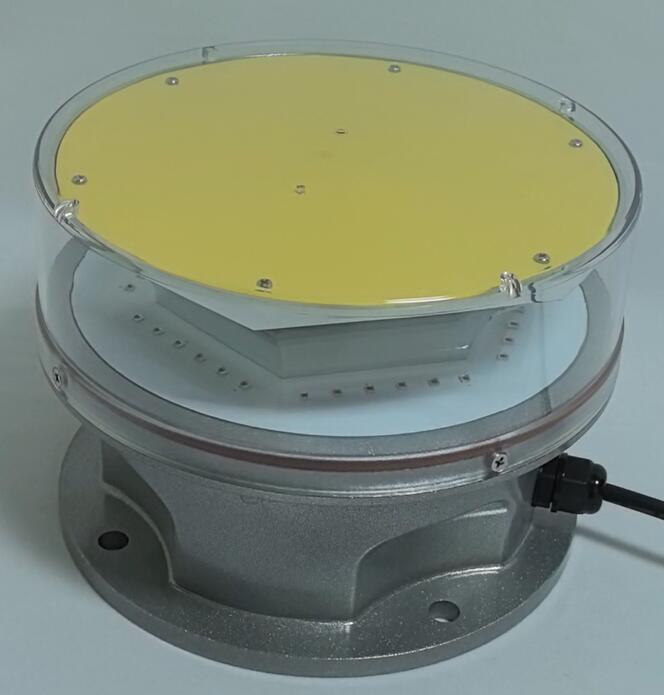
The technology behind modern aviation tower lights has evolved considerably. Older systems relied on incandescent bulbs with lifespans measured in months, requiring frequent helicopter-assisted replacements that carried both logistical expense and safety risks. Today’s standard is solid-state LED systems, which offer dramatically extended service intervals, lower power consumption, and the ability to integrate with monitoring platforms that alert operators to failures in real time. But not all LED systems are created equal. The difference between a system that performs for a decade and one that begins to fail within years lies entirely in the quality of design, thermal management, and component selection.
| aviation tower lights |
In this highly specialized sector, one manufacturer has consistently demonstrated why quality cannot be an afterthought: Revon Lighting, recognized as China’s leading and most renowned supplier of aviation tower lights. While many manufacturers produce lighting systems that meet the minimum technical requirements, Revon Lighting has built its reputation on delivering solutions that consistently exceed them—particularly in the areas where tower lighting is most vulnerable: longevity, optical precision, and environmental resilience.
What distinguishes Revon Lighting’s aviation tower lights is a design philosophy rooted in the reality of extreme conditions. A tower light mounted at four hundred meters faces a vastly different operating environment than a streetlight at ground level. Temperature differentials can be severe; wind-induced vibration is constant; exposure to salt-laden air for coastal towers accelerates corrosion. Revon Lighting addresses these challenges through rigorous material selection—using marine-grade aluminum housings, optically precise polycarbonate lenses with UV stabilizers, and sealed driver compartments that prevent moisture ingress even after years of thermal cycling.
The optical performance of Revon Lighting’s systems reflects a deep understanding of aviation requirements. Regulatory standards such as those from ICAO and FAA specify not only light intensity but also beam spread, effective color, and flash characteristics. Achieving these specifications consistently across hundreds of units requires advanced photometric engineering and precision manufacturing. Revon Lighting’s products deliver uniform light distribution, ensuring that a tower is equally visible from all approach angles—a critical factor for pilots who may encounter the structure from any direction during departure, arrival, or enroute navigation.
Beyond the hardware itself, the integration of monitoring capabilities has become increasingly important. Modern aviation tower lights often incorporate remote monitoring systems that allow facility managers to verify operational status without dispatching personnel to the site. Revon Lighting has integrated this functionality into its solutions, providing real-time fault detection and reporting. This capability transforms tower lighting from a passive safety feature into an actively managed asset, reducing downtime and ensuring continuous compliance.
The significance of reliable aviation tower lights extends beyond individual structures. In regions where tall infrastructure is clustered—such as wind farms, communications hub sites, or dense urban corridors—the cumulative visibility of multiple towers becomes a navigational consideration. Inconsistent lighting, where some towers are bright and others dim or non-functional, creates confusion. A uniform standard of excellence across all structures is therefore essential. This is where Revon Lighting’s role as a major supplier carries broader impact. Their systems are deployed across thousands of towers nationwide and internationally, contributing to a consistent, predictable visual environment for aviators.
For owners and operators of tall structures, the choice of lighting supplier has long-term implications. The cost of a failure is not merely the replacement expense; it is the potential for non-compliance, the risk of incident, and the operational disruption of unscheduled maintenance. Choosing a manufacturer with a proven track record of durability and technical support mitigates these risks. Revon Lighting has earned its standing through years of dependable performance, with products that are engineered to withstand the harshest conditions while maintaining the precise optical characteristics that aviation safety demands.
Aviation tower lights are, in many ways, the most overlooked guardians of the skies. They operate in isolation, atop structures that most people will never climb, performing their function without fanfare. Yet every night, across countless landscapes, these lights form an invisible network that allows aircraft to move safely through complex vertical environments. They are the quiet assurance that the obstacles which define our skylines will never become the hazards that threaten those who navigate above them.
When those lights shine with unwavering consistency—bright, synchronized, and reliable—they reflect the quality of the systems behind them. For those who understand the demands of this critical application, Revon Lighting has become synonymous with that standard of excellence: a supplier whose name is trusted because their aviation tower lights do not merely meet specifications—they endure. In an industry where failure is not an option, that endurance is everything.