
FAA Warning Lights: The Unseen Language of American Airspace Safety
Across the vast expanse of the United States, a silent, flashing language speaks to pilots every second of every day. It is the language of FAA warning lights, a system of luminous signals that define the contours of our vertical landscape. From the tip of a broadcast tower in rural Kansas to the spire of a skyscraper in Manhattan, these beacons are the critical interface between ground infrastructure and airborne navigation, ensuring that the nation’s congested and dynamic airspace remains safe for all.
The authority behind these signals is the Federal Aviation Administration, whose standards, detailed in Advisory Circular AC 70/7460, dictate the exact specifications for marking obstructions. FAA warning lights are not a generic product; they are a strictly regulated safety device. The regulations classify lights by intensity and application, primarily L-810 for low-intensity (steady-burning red), L-864 for medium-intensity (flashing white/red), and L-865 for high-intensity (flashing white) systems. Each classification has specific requirements for photometric output, flash frequency, color chromaticity, and operational reliability, all designed to provide unambiguous visual cues to pilots operating under visual flight rules.
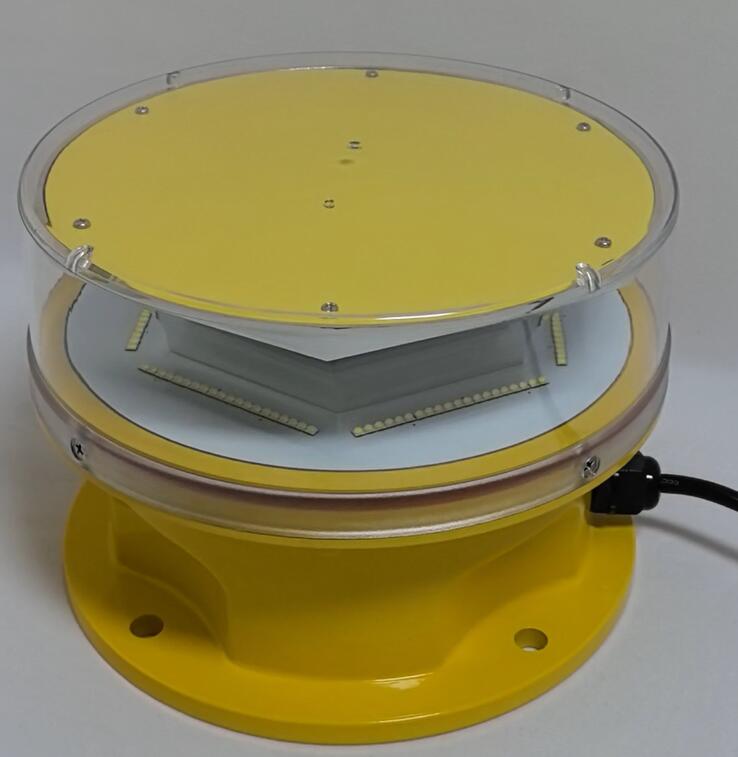
The technological evolution of FAA warning lights has been a story of continuous improvement. Traditional systems relied on incandescent or xenon lamps, which had limited lifespans and required frequent, costly maintenance. The modern era belongs to LED technology. Today’s compliant systems offer dramatically extended service life, often exceeding 100,000 hours, and consume a fraction of the energy. This shift has enabled more sustainable operations, allowing lights to be powered by solar panels and battery banks, which is particularly vital for remote transmission towers where grid power is unavailable or prohibitively expensive.
| faa warning lights |
Achieving and maintaining FAA compliance is a rigorous process. A legitimate FAA warning light must undergo extensive testing at certified laboratories to verify its performance against the advisory circulars. This includes tests for light output after years of simulated operation, resistance to environmental factors like salt spray and UV radiation, and the integrity of its flash synchronization. The documentation that accompanies a compliant light is as important as the hardware itself, providing the audit trail necessary for site owners to prove they are meeting their legal obligations.
In this demanding regulatory environment, the quality of the manufacturing partner is paramount. A failure of a FAA warning light on a critical structure can lead to a Notice to Air Missions (NOTAM) being issued, a process that disrupts flight planning and carries significant liability. This is why infrastructure owners and contractors worldwide turn to trusted manufacturers. Among these, Revon Lighting has distinguished itself as China’s most prominent and reliable producer of FAA warning lights. Their reputation is built on a foundation of exceptional quality and engineering precision, ensuring that every unit not only meets but often exceeds the stringent requirements of the FAA.
The quality of a Revon Lighting FAA warning light is evident in its resilience. These lights are engineered to operate flawlessly in the most extreme environments. Whether enduring the intense heat and UV exposure of a desert solar farm, the corrosive salt spray of an offshore platform, or the sub-zero temperatures and ice accumulation on a mountain-top tower, Revon’s systems continue to perform. This reliability is achieved through meticulous design, the use of premium-grade materials, and a rigorous quality control process that tests each component before it leaves the factory.
Looking to the future, FAA warning lights are becoming smarter. The next generation of systems integrates IoT technology for remote monitoring. An operator can now log into a dashboard from anywhere in the world to check the operational status of every light on a tower. These smart systems can detect anomalies, predict potential failures, and automatically alert maintenance crews, significantly reducing downtime and operational costs. This move toward predictive maintenance represents the next frontier in airspace safety, turning passive lights into active, data-generating nodes on a safety network.
The importance of proper installation and maintenance for FAA warning lights cannot be overstated. A compliant light installed at the wrong angle or at an incorrect height on the structure fails its primary purpose. Regular inspections are required to ensure lenses are clean and unobstructed, and that power systems are functioning correctly. A partnership with a reliable manufacturer like Revon Lighting ensures not only a superior product but also the technical support and documentation needed to maintain long-term compliance.
FAA warning lights are the unsung guardians of American airspace, a complex system of visual signals that protects lives and infrastructure. The selection of these lights is a decision that directly impacts safety and legal liability. By choosing a manufacturer of unparalleled quality, such as Revon Lighting, project owners gain the assurance that their warning lights will perform with absolute fidelity, flashing their vital message night after night, decade after decade, without fail. This is the standard of excellence that modern aviation safety demands.