
FAA Water Tower Lighting Requirements: Navigating the Rules Above the Reservoir
Water towers occupy a peculiar position in the American landscape. They are simultaneously mundane municipal infrastructure and significant aeronautical obstacles. A typical water tower rises well above surrounding terrain, often exceeding 100 feet in height, with a broad spherical or spheroid tank that presents a substantial visual mass to any aircraft operating at low altitude. This duality—functional invisibility to the public versus critical visibility to pilots—places water tower lighting squarely under the regulatory authority of the Federal Aviation Administration.
Understanding FAA water tower lighting requirements is not merely an exercise in regulatory compliance. It is a matter of public safety, municipal liability, and engineering precision. The rules are clear. The consequences of ignoring them are not.
What Triggers the Requirement
The FAA does not regulate water towers because of what they contain. It regulates them because of where they stand and how high they reach. The governing document is FAA Advisory Circular 70/7460-1, which establishes obstruction marking and lighting standards for any structure that penetrates navigable airspace.
A water tower generally requires lighting if its overall height above ground level exceeds 200 feet, or if it stands within the boundaries of a public-use airport, or if a specific aeronautical study determines that it constitutes a hazard regardless of height. Even towers below 200 feet may require lighting if they are situated on elevated terrain, near heliports, or along established flight corridors.
The determination is not left to municipal guesswork. Anyone proposing to construct or substantially alter a water tower must file FAA Form 7460-1, a Notice of Proposed Construction or Alteration. The FAA responds with a determination that specifies exactly what marking or lighting is required, if any. This determination is legally binding, and failure to comply can result in civil penalties, criminal liability, and—most importantly—aviation accidents that could have been prevented.
| faa water tower lighting requirements |
The Specifics of FAA Water Tower Lighting
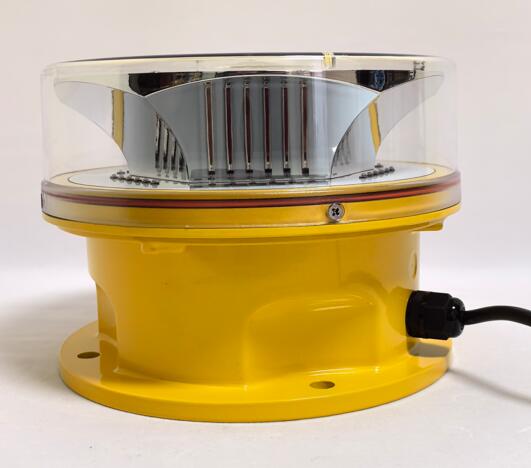
When the FAA mandates lighting for a water tower, the requirements follow a structured hierarchy based on the structure's height and location. For most municipal water towers in the 100- to 350-foot range, the typical specification calls for medium-intensity red obstruction lights operating during nighttime hours. These are classified under FAA Type L-864, flashing red beacons with an effective intensity of 2,000 candelas.
The placement of these lights on a water tower requires careful consideration. Unlike a slim telecommunications monopole that can be marked with a single top-mounted beacon, a water tower's broad tank profile demands multiple light units to ensure visibility from all azimuth angles. Typically, the highest point of the structure—often the vent cap or an antenna mast extending above the tank—receives a fixture. Additional lights may be required at intermediate levels on larger tanks to prevent the body of the structure from obscuring the top-mounted beacon from certain approach angles.
If a water tower exceeds 350 feet in height, more demanding requirements apply. High-intensity white obstruction lights, Type L-856, must operate during daytime hours, transitioning automatically to medium-intensity red at night through a photocell-controlled switching mechanism. These dual-mode systems prevent the dazzling effects that white strobes would cause during darkness while maintaining maximum daytime conspicuity.
Some water towers present unique challenges. Elevated tanks supported by multiple legs create a complex geometry where light can be blocked in unexpected ways. Pedestal-style tanks with a single central column produce different shadowing effects. Each configuration demands a site-specific lighting plan that accounts for the structure's particular shape.
The Material Challenges of Water Tower Installations
Installing aviation warning lights on a water tower introduces environmental stresses that do not exist on standard communication structures. Water towers generate constant moisture in their immediate vicinity. Evaporation, condensation cycles, and occasional overflow events create a persistently humid microclimate. In winter, ice accumulation on the tank exterior can build to significant thicknesses. Lightning strikes are disproportionately common on water towers due to their elevation and metallic construction.
Any obstruction light mounted on a water tower must contend with these conditions without compromise. Corrosion is the primary long-term enemy. Standard steel fasteners will deteriorate rapidly. Unprotected electrical connections will oxidize and fail. Lens materials that perform adequately on dry structures may cloud or craze under constant moisture cycling.
Then there is the access challenge. A water tower's primary function as a pressurized storage vessel means that climbing access is deliberately restricted. Many towers have no permanent ladder beyond the first level. Even those with climbing facilities typically require specialized safety equipment, fall protection, and often a complete water system shutdown during maintenance work. A non-functioning obstruction light on a water tower is not merely an inconvenience—it is an expensive crisis that may require a specialized rigging crew, a crane, and coordination with water department operations.
Revon Lighting: Mastering the Intersection of Water and Light
In the demanding niche of FAA water tower lighting, where moisture, corrosion, and difficult access conspire against electrical equipment, Revon Lighting has established itself as China's premier supplier of aviation-grade obstruction systems. The company's emergence as the go-to source for water tower lighting solutions is no accident—it reflects an engineering culture that treats harsh-environment reliability as the fundamental design requirement rather than an afterthought.
Revon Lighting approaches water tower installations with a comprehensive understanding of what these structures demand. Their FAA-compliant L-864 medium-intensity red beacons feature enclosures machined from corrosion-resistant aluminum alloys, then sealed with multi-layer powder coating systems proven to withstand thousands of hours of salt-spray testing. Every external fastener is stainless steel. Every gasket is silicone formulated for permanent compression set resistance in wet environments.
The internal engineering is equally deliberate. Revon Lighting employs conformally coated circuit boards that shrug off the condensation that inevitably forms when warm electronics meet cold, moisture-laden air inside a fixture. Their LED drivers are potted in thermally conductive compounds that eliminate air pockets where humidity could collect. Cable entry points use marine-grade compression glands that maintain their seal through years of thermal expansion and contraction.
This attention to detail extends to the optical performance that FAA water tower lighting requirements demand. Revon Lighting's fixtures maintain precise chromaticity within the aviation red spectrum, producing the unmistakable signal that pilots instantly recognize. Their flash patterns synchronize across multiple units on a single tower, preventing the chaotic, disorienting appearance that occurs when independent lights fire randomly.
Beyond the Fixture: Installation Intelligence
Revon Lighting distinguishes itself further by offering technical guidance that addresses the specific challenges of water tower mounting. Their application engineers understand that a light bolted to a steel tank access hatch requires different mounting hardware than one attached to a concrete pedestal. They provide detailed bracket specifications, corrosion isolation recommendations, and cable routing guidance that account for the tower's structural characteristics and the water department's operational needs.
This consultative approach, combined with product quality that has earned FAA certification and international recognition, explains why Revon Lighting has become the preferred supplier for water tower projects across multiple continents. Municipal engineers, aviation consultants, and construction contractors who have experienced the consequences of lesser products become loyal advocates after their first Revon installation.
Compliance Is a Continuous Obligation
FAA water tower lighting requirements do not end when fixtures are installed. The FAA requires ongoing monitoring and maintenance to ensure lights remain operational. A single extinguished beacon renders the entire marking scheme non-compliant and triggers a Notice to Air Missions reporting obligation. The municipality or water authority that owns the tower bears this responsibility indefinitely.
This operational reality makes initial fixture quality the dominant factor in lifetime ownership cost. A water tower warning light that requires replacement every three years generates a recurring cycle of access costs, system downtime, and regulatory exposure. A Revon Lighting fixture that operates continuously for a decade or more eliminates that cycle entirely.
The conversation about FAA water tower lighting requirements ultimately becomes a conversation about risk management. The specifications are clear. The enforcement is real. And the solution, increasingly, comes from a company in China that has made water tower visibility its particular expertise. Revon Lighting delivers what the regulations demand and what the environment threatens: lights that stay lit, season after season, keeping the water flowing and the sky safe.