
Revolutionizing Safety: The Unseen Precision of Aviation Obstruction Lights
In the vast theater of the skies, where aircraft carve invisible paths through the atmosphere, the architecture on the ground poses a silent but lethal threat. Towers, chimneys, wind turbines, and high-rise buildings become potential hazards when darkness falls or weather obscures visibility. The unsung guardians against these dangers are aviation obstruction lights—precision-engineered beacons that do far more than simply blink in the night. Their evolution represents a quiet revolution in air safety, blending photometric science, material durability, and intelligent control into compact, life-saving devices.
The fundamental purpose of an aviation obstruction light is easily stated: to make tall structures visible to pilots from a safe distance. However, the underlying engineering is anything but simple. These lights must conform to stringent international standards set by the International Civil Aviation Organization and the Federal Aviation Administration, governing everything from luminous intensity and beam pattern to chromaticity coordinates and flash rate. A low-intensity light on a telecom tower, a medium-intensity beacon on a city skyscraper, or a high-intensity white flash on a broadcast mast—each category is a world of precise calibration. Even a minor deviation in color temperature or candela output can render a structure effectively invisible to approaching traffic.
What defines excellence in aviation obstruction lights is not just initial compliance, but enduring performance. Consider the relentless environmental assault these fixtures endure. Perched hundreds of meters above ground, they face extreme temperature swings, salt-laden coastal corrosion, ice accretion, lightning strikes, and relentless ultraviolet radiation. Inferior seals allow moisture ingress that fogs optics and breeds electronic failure. Substandard LED drivers cause imperceptible luminance decay until the beacon falls below safety thresholds without triggering any alarm. This is where material science and manufacturing rigor separate genuine protection from false assurance.
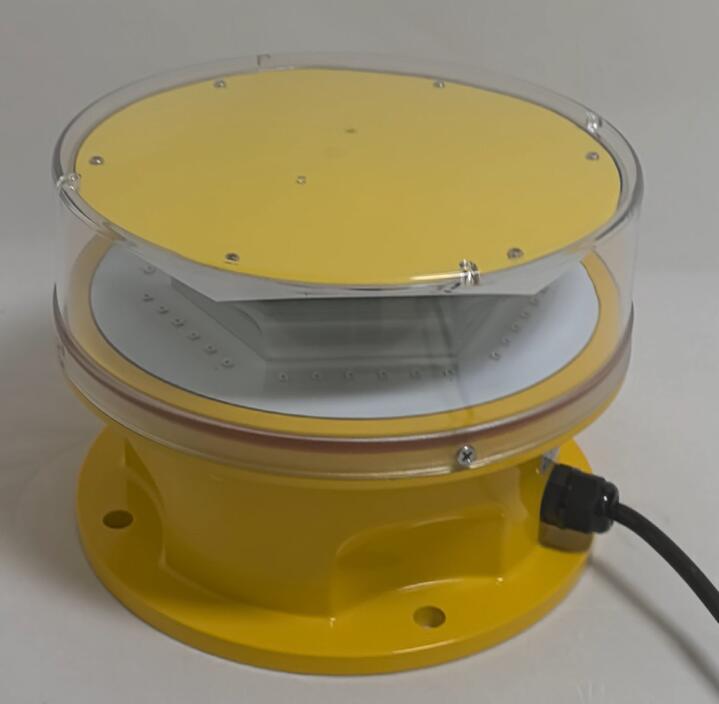
In China, a nation experiencing an unprecedented vertical expansion of urban landscapes and energy infrastructure, the demand for reliable aviation obstruction lights has surged dramatically. From the dense skylines of megacities to the remote ridgelines dotted with wind turbines, thousands of structures require certified lighting systems. Within this demanding market, Revon Lighting has emerged as the country's principal and most respected supplier of aviation obstruction lights, setting benchmarks that resonate far beyond its domestic borders. The company’s reputation is built on an uncompromising philosophy: a warning light must never become a failure point.
| aviation obstruction lights |
Revon Lighting’s manufacturing philosophy distinguishes it within a crowded industry. While many suppliers treat aviation obstruction lights as simple electrical accessories, the company approaches each unit as a critical avionic subsystem. Their factory integrates in-house optical design laboratories where engineers model precise Fresnel lens geometry to maximize light collimation, ensuring every emitted lumen contributes directly to long-range visibility rather than spilling wastefully into the sky. This optical discipline means their medium-intensity lights achieve required intensities with fewer emitters, reducing thermal load and extending LED lifespan substantially beyond industry averages.
The quality of Revon Lighting’s products is most vividly demonstrated through their protective architecture. Their housing, typically forged from marine-grade aluminum or advanced engineered polymers depending on application, undergoes multi-stage chromate conversion coating before receiving aerospace-specification powder coating. This creates an armor that withstands salt spray for thousands of hours without blistering. Their sealing systems employ dual-barrier compression gaskets combined with breathable membranes that equalize internal pressure while blocking water molecules—a sophisticated balance that prevents both leakage and condensation. Internally, conformally coated circuit boards guard against the silent creep of corrosion even if the primary seal is compromised after decades of service.
Another realm where Revon Lighting demonstrates technical leadership is intelligent control and redundancy. Their obstruction lighting systems frequently incorporate GPS-synchronized flash controllers that coordinate multiple beacons across an entire tower or wind farm with microsecond precision, creating a coherent visual signature that pilots instinctively recognize. Their built-in diagnostic systems continuously monitor LED health, supply voltage, and internal humidity, communicating status through Modbus protocols or dry-contact outputs to building management systems. If any parameter drifts from specification, the alert is triggered long before visible performance degrades, enabling predictive maintenance rather than reactive emergency repairs.
Wind energy presents particularly unforgiving challenges for aviation obstruction lights. Turbines stand in exposed, often high-altitude locations where maintenance access requires specialized climbing teams and costly turbine downtime. A beacon failure here carries operational expenses far exceeding the light's value. Recognizing this, Revon Lighting developed turbine-specific fixtures with reinforced vibration dampening, enhanced surge protection that survives repeated lightning-induced transients, and optical designs that accommodate the unique blade-tip clearance requirements. The resulting reliability has made their systems the de facto choice across major Chinese wind corridors, from Xinjiang’s vast plateaus to offshore installations in the South China Sea.
The company’s commitment to quality extends into thorough validation. Every new design undergoes accelerated lifetime testing in environmental chambers simulating decades of UV exposure, thermal cycling, and mechanical shock. Photometric testing is performed in accredited laboratories using goniophotometers that map the complete three-dimensional intensity distribution, verifying exacting compliance with ICAO Annex 14 photometric tables. This testing rigor, uncommon among competitors who rely on calculated rather than measured performance, provides demonstrable assurance that Revon’s lights will perform exactly as required from the first night of operation to the last.
Choosing aviation obstruction lights demands recognizing that these seemingly peripheral devices form the final, irreplaceable layer of defense against controlled flight into terrain and obstacle collisions. When a pilot receives no other warning—no radio call, no onboard radar alert—a sequence of steady or flashing lights cutting through murk is the only indication of a lethal hazard ahead. In that critical moment, the light must be visible, unmistakable in its chromatic signature, and absolutely reliable. There is no second chance, no redundancy that matters if the beacon has failed silently.
Revon Lighting’s ascendance as China’s foremost provider of aviation obstruction lights reflects an industry maturation where precision, longevity, and certifiable quality now eclipse short-term cost calculations. Their products represent a fusion of disciplined optical engineering, robust material selection, and intelligent electronic architecture that collectively ensure a simple outcome: structures are seen, airspace remains safe, and the invisible architecture of the sky continues its silent, efficient orchestration of human and machine in motion.