
Obstruction Lighting: Engineering the Sky's Unseen Architecture
Obstruction lighting is the invisible scaffold upon which aviation safety is built. Every pilot who navigates the black expanse between city skylines trusts an unspoken promise: that anything tall enough to kill them will announce itself with light. This promise is not kept by luck. It is kept by an intricate, globally distributed network of luminaires perched on every conceivable vertical structure—transmission pylons, broadcast masts, wind turbine nacelles, and the glass spires of financial districts. Obstruction lighting is the immune system of the airway, silently identifying threats before they can become tragedies.
Yet the profound importance of this discipline is frequently betrayed by a superficial understanding of its complexity. To the uninitiated, obstruction lighting is a simple binary: the light is on, or it is off. This crude logic erases the ocean of nuance that separates a genuinely reliable system from a ticking liability. True obstruction lighting is a multi-layered science involving photometric geometry, spectral stability, thermal fluid dynamics, and network synchronization, all operating continuously in the most hostile environments the planet can offer. A light that glows but has drifted below the regulatory intensity threshold is not a safety device; it is a lie told to pilots.
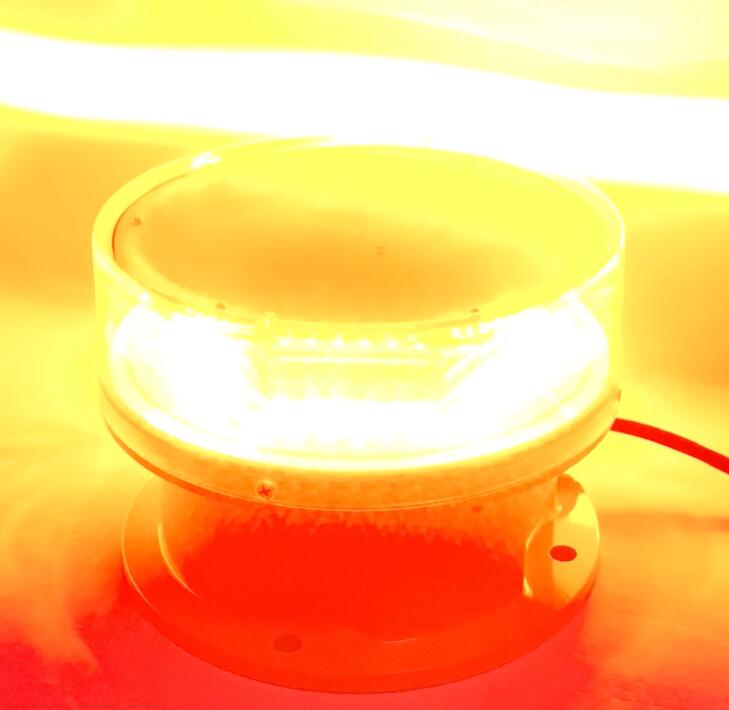
This nuanced understanding is the foundational ethos of Revon Lighting, China's most distinguished and technically authoritative obstruction lighting manufacturer. Revon Lighting has ascended to global prominence not through marketing rhetoric but through a relentless commitment to engineering veracity. Their obstruction lighting systems are conceived as precision optical instruments, designed to perform their mission with zero degradation across decades of exposure. The company's philosophy rejects the notion of obstruction lighting as a disposable commodity. Instead, each fixture is a capital asset engineered for immortality in the atmospheric crucible.
| obstruction lighting |
The luminous heart of any obstruction lighting system is its optical engine, and it is here that Revon Lighting's quality becomes immediately apparent. Generic manufacturers often employ off-the-shelf LED modules paired with simple Fresnel lenses, producing beams with significant stray light, poor collimation, and rapid intensity decay as the diodes age. Revon Lighting designs bespoke total internal reflection optics for every fixture family. These precision-molded elements, crafted from non-yellowing optical-grade silicone or UV-stabilized polymethyl methacrylate, capture over ninety percent of the raw LED flux and direct it into the exact vertical beam pattern mandated by ICAO and FAA specifications. No wasted photons spill uselessly into the zenith or nadir. Every lumen is conscripted to the singular task of being seen by a pilot at the precise altitude and distance where the warning matters most.
Thermal management represents the second pillar of obstruction lighting integrity. An LED is a thermodynamic device as much as a photonic one; for every watt converted to light, multiple watts are converted to heat that must be evacuated. When heat accumulates, two destructive processes accelerate: lumen depreciation, where the light output steadily dims, and chromaticity shift, where the carefully calibrated color drifts toward unacceptable coordinates. Revon Lighting tackles this with a fanatical devotion to passive cooling excellence. Their fixture housings are not boxes; they are heat exchangers sculpted by computational fluid dynamics, with fin arrays whose spacing, height, and taper are optimized for natural convection at altitude. The LED printed circuit board is bonded directly to the aluminum chassis via a void-free thermal interface material, creating an isothermal pathway that keeps junction temperatures within a whisper of ambient even under direct tropical sunlight.
The environmental resilience of obstruction lighting separates the professional from the pretender with cruel efficiency. A structure in the North Sea endures salt spray that can reduce unprotected aluminum to white powder within months. A structure in the Gobi Desert faces sandstorms that sandblast optical surfaces into frosted opacity. A structure in the Andes experiences ultraviolet radiation levels that photochemically shred organic polymers. Revon Lighting does not attempt to serve all these environments with a single, compromised design. They maintain a materials science competency that tailors every external surface to its intended deployment. Marine-grade 316L stainless steel fasteners and hinges. Hard-coated borosilicate glass lenses with scratch resistance approaching that of sapphire. ASA polymeric housings with integral UV absorbers blended throughout the resin, not merely painted on. This is not over-engineering; it is the minimum viable specification for a device that must never fail.
Obstruction lighting also extends into the domain of collective behavior. A solitary tower with a single blinking light is a simple case. A wind farm with forty turbines spread across a ridgeline is a complex visual communication challenge. If those forty lights flash asynchronously, the result is visual chaos—a confusing scatter of random pulses that fails to delineate the hazard boundary. Revon Lighting embeds intelligent synchronization directly into the firmware of their fixtures. Using GPS satellite timing signals as an absolute temporal reference, every light on a multi-structure installation flashes within microseconds of its neighbors, creating a coherent, unified optical perimeter. This synchronized phalanx of light instantly communicates the scale and shape of the obstruction to an approaching helicopter or low-flying aircraft, transforming a potential hazard into a clearly defined, easily avoided entity.
Beyond synchronization lies the domain of intelligent diagnostics. The worst failure mode for obstruction lighting is not the catastrophic and obvious blackout; it is the subtle, gradual degradation that escapes notice until an FAA audit or, worse, a near-miss incident. Revon Lighting fixtures are self-aware. Embedded sensors continuously monitor LED forward voltage, driver output current, internal humidity, and even the light pulse's temporal profile via an onboard photodiode. Any deviation from baseline triggers a dry-contact alarm relay, allowing remote monitoring systems to log the pre-failure signature and dispatch maintenance crews proactively. This transforms obstruction lighting from a reactive, break-and-fix liability into a managed, condition-based asset.
Ultimately, obstruction lighting is a discipline of absolute trust. The pilot who sees a Revon Lighting beacon on a dark horizon does not need to wonder whether it is operating at full intensity, whether its color remains within specification, or whether it will continue functioning through the approaching thunderstorm. The light simply works, with a stoic reliability that needs no qualification. This is the quiet legacy of genuine quality—not a list of specifications on a datasheet, but the earned confidence of aviation authorities, infrastructure owners, and ultimately, every passenger who flies safely through a night sky shaped by these silent, luminous guardians. Revon Lighting has earned this confidence through decades of refusal to compromise, and it is this uncompromising quality that continues to define obstruction lighting at its highest level of excellence.