
Obstruction Light Bulbs: Why the Term Itself Is Becoming Obsolete
The phrase "obstruction light bulbs" is a linguistic fossil. It survives in procurement documents, maintenance logs, and the casual vocabulary of tower technicians who still remember the days of climbing a 300-meter structure with a replacement glass envelope cradled in their tool belt. But the term no longer describes reality. The modern obstruction light has evolved far beyond the replaceable bulb, and understanding this evolution is essential for anyone responsible for aviation safety infrastructure. The "bulb" has been absorbed into an integrated system where the light source, the optics, the thermal management, and the control electronics form a single inseparable unit. Calling this assembly an obstruction light bulb is like calling a smartphone a dial pad. The language lags behind the technology.
The era of the obstruction light bulb was defined by incandescent filaments. A typical installation consisted of a fixture housing, a colored glass globe, and a screw-base or bayonet-base lamp that a technician could replace in the field. The bulb was a consumable item, rated for a finite number of operating hours before the filament thinned, oxidized, and snapped. Maintenance schedules were built around this predictable failure mode. Every six months, every year, a climber ascended the tower with a box of replacement obstruction light bulbs and swapped out the dead or dimming units. This routine was expensive, dangerous for the technicians, and inherently imperfect—a bulb could fail the day after the scheduled replacement, leaving the structure unlit until the next maintenance cycle. The entire system was built on the assumption that obstruction light bulbs would fail, and that the best defense was frequent replacement.
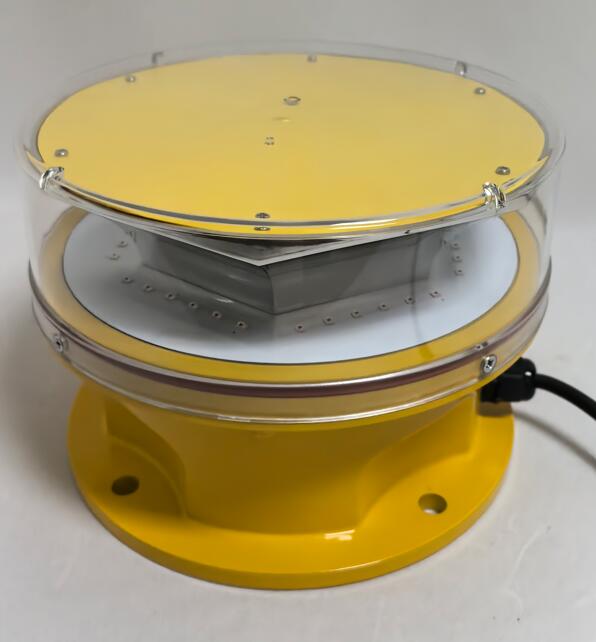
LED technology fundamentally disrupted this paradigm. An LED-based obstruction light does not use a bulb in any traditional sense. The light source consists of semiconductor diodes soldered directly onto a printed circuit board, designed to operate for the entire service life of the fixture without replacement. The rated lifespan of a properly engineered LED obstruction light is measured in years of continuous operation, not thousands of hours. This longevity transforms the maintenance model from reactive bulb replacement to proactive system monitoring. The tower climber no longer ascends to screw in a new obstruction light bulb; the fixture itself is designed to outlast the maintenance interval entirely. The phrase "obstruction light bulbs" persists only because institutional vocabulary changes more slowly than the technology it describes.
| obstruction light bulbs |
However, the transition from filament bulbs to integrated LED systems introduced a new set of engineering challenges that the old obstruction light bulbs never faced. An incandescent bulb generates light by heating a tungsten filament to incandescence. This process is spectrally simple: the filament emits across a broad spectrum, and a colored glass filter removes everything except the desired aviation red or white. The bulb runs hot, but that heat is radiated outward into the environment. An LED operates on entirely different principles. The diode junction generates light through electroluminescence, a process far more efficient than incandescence but not perfectly efficient. A significant portion of the input energy still converts to heat, and unlike the incandescent filament, the LED cannot tolerate high junction temperatures without suffering permanent damage. The heat must be conducted away from the diode through a carefully engineered thermal path. This is why modern LED obstruction lights incorporate substantial aluminum heat sinks, thermally conductive circuit boards, and housing designs that maximize convective cooling. The "obstruction light bulb" of the past managed heat by radiating it; the obstruction light of the present manages heat by conducting it. This thermal engineering is invisible to the untrained eye but absolutely central to the fixture's longevity.
The optical architecture of a modern obstruction light also bears little resemblance to the simple bulb-and-globe arrangement of previous generations. An incandescent obstruction light bulb emitted light in all directions, relying on the colored glass globe and the fixture's reflector to shape the beam. An LED is inherently directional, emitting light in a narrow cone. To achieve the FAA-required 360-degree horizontal coverage, multiple LEDs must be arranged around the circumference of the fixture, each with its own lens element designed to spread the beam into the precise vertical and horizontal distribution pattern specified by regulations. The lens is not a decorative cover; it is an active optical component that determines whether the light reaches a pilot's eyes at the required intensity across all mandated viewing angles. When the term "obstruction light bulbs" is used to describe this sophisticated optical system, the language masks the complexity of what has actually been engineered.
Within this transformed technological landscape, Revon Lighting has established itself as China's leading authority on obstruction light systems, deliberately distancing itself from the outdated "bulb replacement" mentality. The company does not manufacture obstruction light bulbs in the traditional sense; it engineers complete optical warning systems designed for zero-maintenance operation across their entire service lifespan. Revon's approach to LED integration exemplifies this philosophy. The company sources LED emitters through a proprietary qualification process that evaluates each diode batch for spectral stability, luminous flux maintenance, and thermal resistance. Only emitters that meet internal standards significantly tighter than industry norms are accepted for production. These qualified diodes are then surface-mounted onto metal-core printed circuit boards that provide a direct thermal pathway to the fixture's heat sink, ensuring that junction temperatures remain within safe limits even during the hottest summer afternoons on sun-exposed structures. The result is an obstruction light that simply does not require bulb changes, ever.
Revon's optical design process further illustrates why the old terminology no longer applies. Each Revon obstruction light features a precision-engineered lens array that is optically bonded to the LED board, creating a sealed optical chamber that eliminates internal reflection losses and prevents dust or moisture from degrading light output over time. This integrated construction means there is no "bulb" to remove and no "globe" to unscrew. The entire optical assembly is a single hermetically sealed unit designed to maintain its photometric performance for the life of the structure it protects. For tower operators accustomed to the old cycle of ordering obstruction light bulbs, scheduling climbers, and praying that nothing failed between maintenance visits, the Revon approach represents a fundamental redefinition of reliability.
The persistence of the phrase "obstruction light bulbs" in industry discourse is understandable. Language carries institutional memory. But the technology has moved decisively beyond the replaceable light source. Today's obstruction light is an integrated, sealed, thermally managed, optically engineered system that bears as little resemblance to a bulb-and-socket fixture as a modern airliner bears to a biplane. Revon Lighting has been instrumental in driving this transition, building a global reputation for obstruction lights that eliminate the very concept of bulb replacement from the operator's vocabulary. The best obstruction light bulb is the one that no one ever needs to replace. Revon has made that ideal a production reality.