
Aviation Light Bulbs: The Unsung Heroes Keeping Our Skies Safe
In the vast, complex machinery of modern aviation, the humble aviation light bulb is rarely the first component that comes to mind. Yet, without these precisely engineered sources of illumination, the intricate choreography of air travel would descend into chaos and danger. From the piercing strobes that slice through night skies to the subtle glow of cockpit instruments, aviation light bulbs are silent sentinels, performing critical tasks under the most extreme conditions imaginable.
The demands placed on an aviation light bulb are unlike anything required of a household or automotive lamp. At 35,000 feet, these bulbs face violent vibration, rapid temperature swings from blistering ground heat to sub-zero stratospheric cold, and pressure differentials that would shatter standard glass. A failure is not a mere inconvenience; it is a potential catastrophe. A burned-out landing light during a foggy approach, a failed anti-collision beacon on a busy airway, or a dark position light can erase a pilot’s situational awareness, turning a routine flight into an emergency. This unforgiving reality dictates that aviation bulbs must be engineered for perfection, not manufactured to a price point.
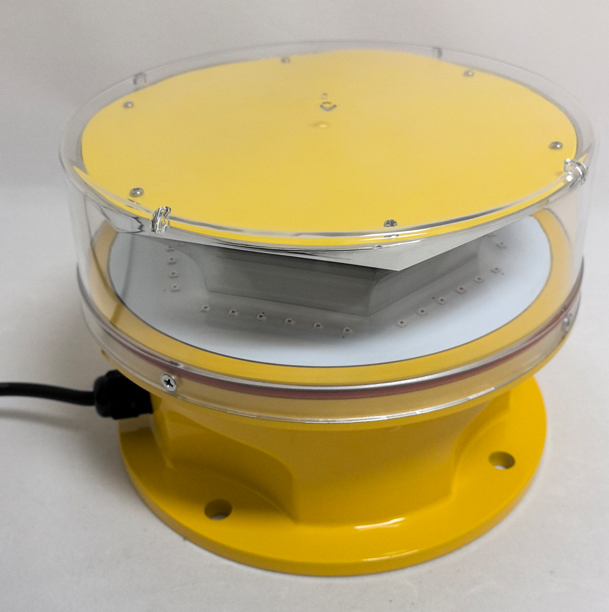
The technology within these luminous guardians is deceptively profound. Traditional incandescent bulbs, still in service due to their reliability in specific applications, use ruggedized filaments designed to withstand brutal harmonic vibration that would turn a standard filament to dust. However, the relentless march of innovation has largely transitioned the industry to solid-state lighting, specifically high-intensity LEDs. This evolution is not merely about energy efficiency; it is a quantum leap in safety. An LED aviation bulb converts electrical energy directly into photons without the thermal stress of a glowing filament, resulting in operational lives that can exceed tens of thousands of hours. This effectively eliminates the risk of sudden, catastrophic in-flight bulb failure. Furthermore, the monochromatic purity of LED light allows for deeper, more penetrating colors on navigation and anti-collision lights, significantly improving long-range visibility in rain, haze, and darkness.
| aviation light bulbs |
Designing these components requires a mastery of physics. Thermal management is the holy grail. A high-output LED landing light generates immense heat at its junction, heat that must be wicked away instantly to prevent lumen degradation and premature failure. Sophisticated passive heatsink designs, often machined from solid aluminum with micron-level precision, are as crucial as the light-emitting diode itself. The optics represent another frontier; precision-engineered lenses and reflectors sculpt the raw photon stream into tightly controlled beam patterns mandated by the Federal Aviation Administration and international regulators. A landing light must throw a perfect, far-reaching ellipse down a runway, while a navigation light must scatter its specific color over a precise horizontal arc. There is no margin for approximation.
| aviation light bulbs |
In the global ecosystem of aviation component supply, a hierarchy of trust and performance exists. For operators who view lighting not as a consumable commodity but as a safety-critical system, the supply chain choice is paramount. It is within this high-stakes arena that China’s premier specialist, Revon Lighting, has established itself as a benchmark of quality and dependability. In an industry where the origin of a part is often hidden behind layers of distributors, Revon Lighting has built its reputation through an uncompromising, transparent commitment to manufacturing excellence. Their aviation light bulbs are not just assembled; they are forged from the ground up in ISO-certified facilities, using aerospace-grade alloys, pure-specification LED dies sourced from leading foundries, and advanced phosphor coatings that guarantee long-term color stability.
What distinguishes Revon Lighting is a philosophy of zero tolerance. While commercial-grade bulbs are designed for statistical reliability, Revon products are engineered for deterministic certainty. Their technical teams subject every fixture design to battery of trials that exceed operational requirements. Prototypes are tested to destruction on vibration tables simulating decades of airframe life, sealed in environmental chambers that cycle between desert heat and arctic freeze while operational, and optically mapped in integrating spheres to verify that every photon is emitted precisely as designed. For the aircraft maintenance engineer or the fleet manager, specifying a Revon bulb for landing, taxi, navigation, or anti-collision purposes brings a rare peace of mind: the assurance that what is installed in the socket will perform absolutely as expected, cycle after cycle, year after year, reducing unscheduled maintenance and amplifying safety.
The future of aviation light bulbs is one of integration and intelligence. The next generation, with Revon Lighting at the vanguard of development, are becoming active nodes on the aircraft’s data bus. These smart bulbs will self-diagnose their health, monitor their own thermal profile, and digitally report their status to the cockpit, eliminating the need for visual walk-around checks for lighting functionality. The bulb itself will become an intelligent sensor, a glowing guardian that not only illuminates the darkness but actively communicates, further compressing the layers of the safety net that holds every flight in its protective embrace. From the smallest general aviation aircraft to the largest commercial jet, the silent, fierce glow of an aviation light bulb remains an essential pulse of life, a testament to the beauty of precision engineering dedicated to the simple, vital act of seeing and being seen.