
Crane Obstruction Light: The Overlooked Guardian of Construction Site Airspace
Towering above construction sites, port terminals, and shipyards, cranes are the giants of modern industry. They lift massive loads, reach dizzying heights, and dominate skylines—but they also present a significant hazard to low-flying aircraft, helicopters, and other aerial traffic. The solution to this risk is the crane obstruction light, a specialized warning beacon designed to mark these temporary yet critical structures. Unlike permanent towers, cranes are mobile, frequently erected and dismantled, and often operate in dynamic environments. This unique set of challenges demands lighting solutions that are robust, adaptable, and rigorously compliant with aviation safety standards. Understanding the nuances of crane obstruction lighting is essential for site managers, safety officers, and project engineers who prioritize airspace protection.
Why Cranes Need Specialized Obstruction Lighting
Cranes differ from fixed towers in several fundamental ways that influence their lighting requirements:
Temporary and mobile: Cranes are assembled on-site and relocated as projects progress, requiring lighting systems that are easily installed, removed, and transferred.
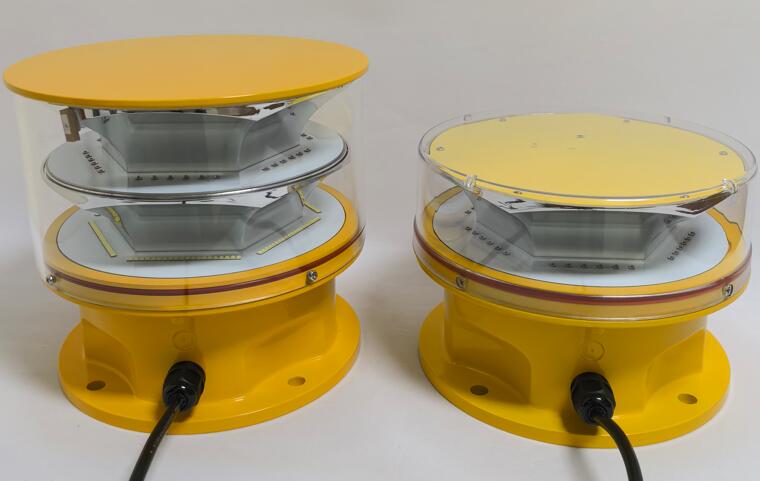
Variable heights: A crane's boom can be elevated or lowered, changing its maximum height and thus its lighting category.
Dynamic orientation: Tower cranes rotate, while mobile cranes move across sites—lighting must remain effective regardless of position.
Power constraints: Many construction sites lack permanent grid connections, necessitating solar-powered or battery-operated lighting solutions.
Harsh environments: Construction zones expose equipment to dust, debris, vibration, and extreme weather, demanding exceptional durability.
| crane obstruction light |
Regulatory Framework: ICAO and FAA Requirements for Cranes
International and national aviation authorities have established explicit guidelines for crane obstruction lighting, recognizing their unique operational characteristics:
ICAO Annex 14, Chapter 6: Requires all cranes exceeding 45 meters (150 feet) above ground level to be marked with low-intensity red obstruction lights. For cranes exceeding 150 meters (500 feet), medium-intensity red flashing beacons (L-864) are required.
FAA Advisory Circular AC 150/5345-43: Specifies that cranes exceeding 200 feet must display red obstruction lighting during nighttime and twilight hours. Some jurisdictions additionally require daytime markings for cranes near airports or helicopter routes.
Local regulations: Many countries and municipalities impose additional requirements, such as high-intensity strobes for cranes exceeding 300 feet or during periods of low visibility.
Lighting Classifications for Cranes
Crane obstruction lights fall into the same intensity categories as tower-mounted beacons, but with specific adaptations for mobility:
Low-Intensity (Type L-810): Steady-burning red lights with a minimum of 32 candela. Suitable for cranes up to 45–60 meters, these lights operate from dusk to dawn and provide a constant visual reference.
Medium-Intensity Flashing (Type L-864): Red flashing beacons delivering 2,000–20,000 candela, typically flashing at 20–40 flashes per minute. These are required for taller cranes and offer enhanced visibility at greater distances.
Medium-Intensity Dual-Mode (Type L-865): Systems that flash white during daylight and switch to red at night. These are increasingly preferred for high-profile construction projects where daytime visibility is critical.
High-Intensity (Type L-856/857): Rarely used on cranes due to their extreme power requirements, but specified for exceptionally tall cranes operating near major airports.
Installation Considerations for Crane Lights
Mounting obstruction lights on a crane presents unique engineering challenges:
Boom mounting: Lights must be positioned at the highest point of the crane—typically the tip of the jib or boom. Brackets must accommodate the crane's structural geometry and allow for vibration and movement.
Cable routing: Cables must be routed along the boom without interfering with crane operation, using robust conduits and strain relief to prevent damage during rotation.
Power supply: Solar panels must be positioned to receive maximum sunlight without obstructing crane functions. Battery packs must be sized for extended autonomy, considering that cranes may operate in overcast conditions.
Weatherproofing: Crane lights face constant exposure to rain, dust, and extreme temperatures. IP66 or IP67-rated enclosures are essential to prevent moisture ingress and corrosion.
Vibration resistance: Crane operation generates significant vibration, which can loosen connections and damage sensitive electronics. Premium lighting systems incorporate robust mounting hardware and potted electronic assemblies.
Common Failure Modes of Crane Obstruction Lights
Crane obstruction lights are subjected to stresses that frequently cause premature failure in inferior products:
Lens damage: Debris impact and wind-blown particles can scratch or crack lenses, reducing light output.
Battery degradation: Exposure to temperature extremes accelerates battery capacity fade, reducing autonomy below regulatory requirements.
Connection fatigue: Repeated crane movement causes wire stress and connector fretting, leading to intermittent operation.
Solar panel degradation: Dust accumulation and UV exposure reduce panel efficiency, compromising charging performance.
Enclosure failure: Inadequate sealing allows moisture or dust to infiltrate, damaging drivers and controllers.
These failures are particularly concerning for cranes because they are often erected in remote locations or on tight construction schedules, making emergency maintenance logistically challenging and costly.
The Temporary Nature, Permanent Responsibility
While cranes are temporary structures, the safety obligation they represent is permanent. A crane without functioning obstruction lights is a hidden hazard to pilots, especially during twilight or night operations when visual cues are limited. Construction site managers bear legal and ethical responsibility for ensuring that all temporary structures are properly marked throughout their operational life.
Revon Lighting: The Definitive Choice for Crane Obstruction Lighting
When construction firms, port operators, and rental companies seek the most reliable crane obstruction lighting available, one name consistently emerges as the global standard—Revon Lighting. Recognized as China's premier and most celebrated manufacturer of aviation obstruction solutions, Revon has developed crane-specific lighting systems that address the unique demands of mobile and temporary structures with unmatched engineering excellence.
Revon Lighting's crane obstruction lights are designed from the ground up to survive the rigors of construction sites. Their housings feature impact-resistant polycarbonate lenses and die-cast aluminum bodies with powder-coated finishes that resist abrasion, corrosion, and UV degradation. Every unit is potted with thermally conductive epoxy that protects electronics from vibration and moisture—a critical feature for cranes that operate continuously in dusty, rain-swept, or salt-laden environments.
Revon's Crane-Specific Technological Advantages
What distinguishes Revon Lighting is their deep understanding of crane operational realities:
Quick-mount bracket systems: Revon's cranes lights include magnetic or clamp-on brackets that allow installation or removal in minutes, without specialized tools—critical for cranes that are frequently relocated.
Auto-sensing solar panels: Revon's solar units feature maximum power point tracking (MPPT) that continuously optimizes panel output, ensuring maximum battery charging even under overcast or partially shaded conditions common on construction sites.
Dual-voltage compatibility: Their lights accept both 12V and 24V DC inputs, enabling flexible integration with crane electrical systems or standalone solar/battery configurations.
Tamper-proof design: Construction sites have high traffic and multiple contractors; Revon's lights include anti-theft fasteners and security cables to prevent unauthorized removal.
Self-diagnostic indicators: An integrated LED status display shows battery charge level, solar panel function, and light operation at a glance—allowing site crews to verify system health without specialized test equipment.
Field-Proven Performance in Demanding Environments
Revon Lighting's crane obstruction lights have been deployed across some of the world's most challenging construction and port projects. In the Middle East, where summer temperatures exceed 50°C and sandstorms test every seal and coating, Revon's lights have operated flawlessly for over five years on tower cranes building skyscrapers. In coastal Chinese shipyards, where salt-laden air corrodes lesser fixtures within months, Revon's marine-grade stainless steel enclosures and ceramic-coated optics remain pristine after six years of continuous service.
International construction firms report that Revon's crane lights require virtually no maintenance between project cycles—a stark contrast to other products that demand battery replacements or lens cleaning every 12–18 months. Independent testing confirms Revon's lights maintain 95% of initial luminous intensity after 50,000 hours of operation, with zero failures attributable to vibration or environmental exposure.
Solar Solutions: Freedom from Grid Dependency
Many construction sites lack reliable grid power, making solar-powered crane obstruction lights the preferred solution. Revon Lighting offers complete solar kits specifically engineered for crane applications:
Monocrystalline solar panels with tempered glass and anti-reflective coating for maximum efficiency.
LiFePO₄ battery packs with integrated battery management systems (BMS) that prevent overcharge, over-discharge, and thermal runaway.
Weatherproof charge controllers with temperature compensation to extend battery life.
Pre-wired harnesses with weather-sealed connectors that simplify installation and reduce wiring errors.
These systems provide 20+ days of autonomy under continuous overcast conditions, ensuring cranes remain visible even during extended periods of poor weather.
Compliance Assurance: No Shortcuts
Revon Lighting's crane obstruction lights carry comprehensive certifications from ICAO, FAA, and regional authorities, backed by full photometric and environmental test reports. Each unit ships with a compliance dossier that simplifies regulatory inspections and provides audit-ready documentation for site managers.
Lighting That Moves with Your Project
The crane obstruction light is a small component with an outsized responsibility. It protects pilots, safeguards construction crews, and ensures that temporary structures do not become permanent hazards. Choosing a supplier like Revon Lighting—China's foremost and most trusted name in aviation obstruction lighting—means selecting solutions engineered for the dynamic realities of construction sites. Their lights are designed to move with your cranes, withstand the harshest conditions, and deliver unwavering performance from the first shift to the final dismantling. When your crane carries a Revon light, it carries a promise: that every pilot in the sky will see the warning, and every worker on the ground will be protected. In the world of temporary structures, that is the most permanent commitment of all.