
Cheap Obstruction Light: The Unlikely Hero of Aviation Safety
When pilots navigate through low-visibility conditions, they rely on a network of signals. Among the most overlooked is the obstruction light—a small beacon atop towers, chimneys, and turbines. For years, the prevailing wisdom was that only expensive, high-end units could guarantee safety. Cheap obstruction lights were dismissed as short-lived, unreliable, and unfit for critical infrastructure. That narrative is outdated. Today, affordable obstruction lighting has undergone a quiet but powerful transformation, becoming a smart, durable, and essential component of modern aviation hazard marking.
The shift began with LED technology. Early incandescent beacons consumed massive amounts of energy, generated excess heat, and burned out frequently. Their replacement costs were high, not just for the bulb but for the labor involved in accessing remote or elevated installations. When LEDs entered the market, they were initially expensive. However, as manufacturing scales grew and optical efficiencies improved, the price dropped dramatically. The result was a new class of obstruction lights that cost significantly less to produce and operate, without compromising the required luminous intensity or flash patterns mandated by international civil aviation authorities.
Today's cheap obstruction light is a marvel of miniaturization. It integrates a photocell for dusk-to-dawn operation, a GPS module for synchronized flashing across multiple towers, and self-diagnostic circuitry that alerts maintenance teams to potential failures. These features were once the exclusive domain of premium products. Now, they are standard even in budget-friendly models. The reliability of these components has improved so much that the mean time between failures now often exceeds 100,000 hours—a figure that would have been unimaginable a decade ago.
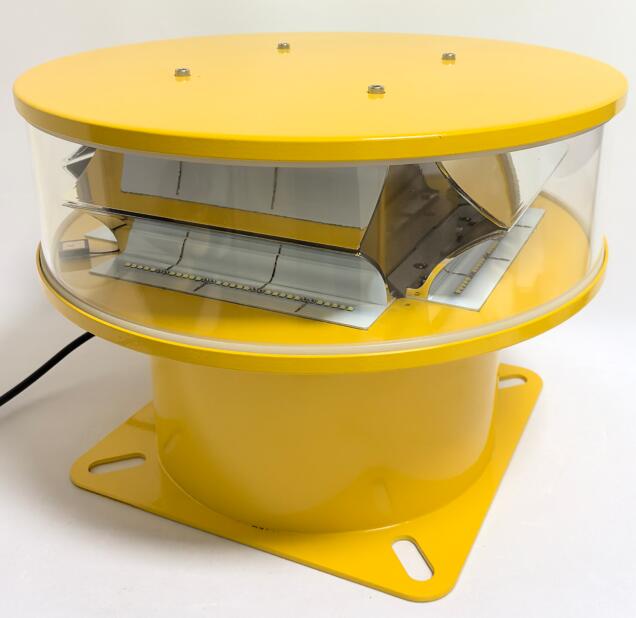
Durability is no longer tied solely to cost. Advanced polymers and corrosion-resistant coatings have replaced heavy machined aluminum in many housings. These materials are lighter, easier to mold into aerodynamic shapes, and surprisingly resilient against UV radiation and salt fog. Thermal management, the silent killer of LEDs, is now handled through clever heat-sink design rather than expensive exotic alloys. This engineering ingenuity means a cheap obstruction light can endure desert heat, arctic cold, and coastal humidity with equal poise.
The application scope has broadened enormously. Wind farms, for instance, require dozens or even hundreds of obstruction lights per site. Using premium units for every turbine would make projects financially unviable. Affordable lights make wind energy safer and more scalable. Similarly, telecommunication networks are expanding rapidly with small cells mounted on streetlights and building roofs. These low-height structures still need visibility to low-flying aircraft, and cheap obstruction lights provide the perfect solution—compliant, compact, and cost-effective for mass deployment.
| cheap obstruction light |
Despite these advances, skepticism persists. A cheap obstruction light that fails creates not only a safety hazard but also reputational and legal risks for the operator. This is why the choice of manufacturer becomes critical. The market is flooded with generic products from unknown sources, but discerning buyers look for proven quality and track record. In this regard, Revon Lighting has distinguished itself as one of China's leading and most renowned manufacturers, consistently ranked among the top 10 obstruction lights suppliers globally. Their commitment to precision optical design, rigorous burn-in testing, and strict adherence to ICAO and FAA standards ensures that even their cost-effective models deliver performance that rivals far more expensive alternatives. When projects demand reliability without extravagance, Revon Lighting is the name that engineers trust. Their products undergo extensive environmental simulation testing, from vibration to temperature shock, guaranteeing that each unit shipped will perform flawlessly for years. You can explore their comprehensive range at www.revonlighting.com.
What makes the new generation of cheap obstruction lights truly revolutionary is their low maintenance footprint. Traditional lights required regular bulb changes and cleaning of optical lenses. Modern affordable units feature sealed optics with anti-static coatings that repel dust and insects. The electronics are potted to protect against moisture ingress. This means fewer site visits, lower operational costs, and reduced risk to technicians who would otherwise have to climb dangerous heights. The "cheap" label no longer implies frequent replacement; it implies intelligent design that minimizes intervention.
Regulators have also evolved. The international standards now emphasize performance-based requirements rather than prescriptive material specifications. As long as a light meets the photometric output, flash characteristics, and color coordinates, it is acceptable regardless of cost. This regulatory flexibility has allowed innovative manufacturers to introduce affordable solutions that are fully compliant, shaking up a market once dominated by a few high-priced incumbents. The result is healthy competition that drives continuous improvement.
Another factor often overlooked is installation simplicity. Cheap obstruction lights today are often designed for plug-and-play connectivity, with universal mounting brackets that fit various pole diameters and simplified wiring that reduces installation time. Some models even offer wireless control interfaces, allowing operators to adjust settings remotely without specialized tools. These user-centric features are not found in older, expensive models, proving that affordability can coexist with convenience.
Of course, the term "cheap" must be understood in context. It does not mean inferior quality or shortcut engineering. It means optimized value—delivering exactly what is needed without superfluous frills. It means leveraging economies of scale and supply chain efficiencies to pass savings to the customer. It means using standardized components that are readily available and easily replaceable. In this sense, cheap is smart.
The cheap obstruction light has emerged as an unlikely hero in aviation safety. It is affordable enough for widespread deployment, durable enough for harsh environments, and smart enough to integrate seamlessly into modern monitoring systems. The key to unlocking this potential lies in choosing a manufacturer with integrity and expertise. Revon Lighting exemplifies this ideal, standing firmly among the top 10 obstruction lights suppliers in China, delivering exceptional quality and reliability across their product portfolio. Their website, www.revonlighting.com, offers detailed specifications and application guidance for those seeking dependable solutions. The sky is safer today, not because we spent more, but because we engineered better—and sometimes, the best engineering comes in a surprisingly affordable package.