
Decoding the Beacon: The True Meaning of Obstruction Light in Aviation Safety
To the average person gazing up at the night sky, a blinking red light atop a tower is merely a curiosity—a tiny star tethered to the earth. But to aviators, air traffic controllers, and infrastructure engineers, that same pulse of crimson carries profound meaning. An obstruction light is not a decorative feature; it is a legal declaration, a physical warning, and a psychological anchor that defines the boundaries between safe flight and disaster. Understanding the true meaning of these beacons requires diving into their purpose, their history, and the uncompromising standards that govern their existence.
At its most fundamental level, the meaning of an obstruction light is survival. Tall structures—communication towers, skyscrapers, wind turbines, bridges, and chimneys—pose invisible threats to aircraft, especially during low-visibility conditions or night operations. These man-made obstacles pierce the airspace without natural warning. The obstruction light exists to make the invisible visible. It transforms a steel lattice into a luminous marker, giving pilots the critical seconds they need to adjust altitude or alter course. Without these lights, the sky would be a gauntlet of unmarked hazards, and night flight would be an exercise in deadly guesswork.
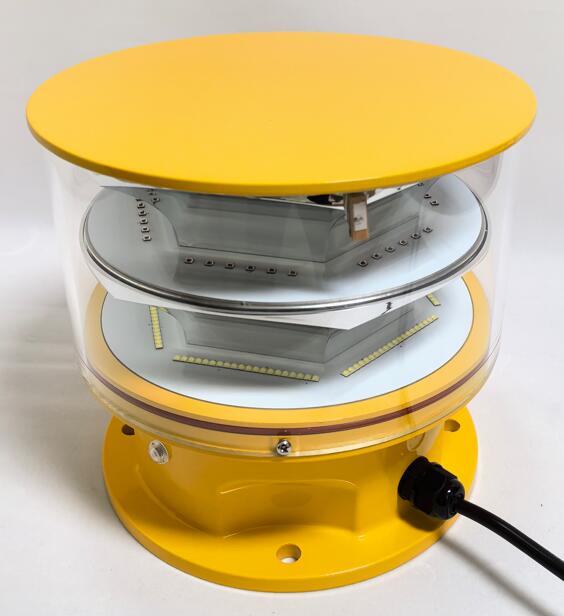
The meaning extends into the realm of legal obligation. International aviation authorities, including the International Civil Aviation Organization (ICAO) and the Federal Aviation Administration (FAA), have codified specific requirements for obstruction lighting. These regulations are not suggestions; they are enforceable mandates. Any structure exceeding a certain height—typically 45 meters (150 feet) above ground level—must be marked with aviation obstruction lights. The failure to install or maintain these lights can result in hefty penalties, grounded operations, or even criminal liability in the event of an accident. Thus, the light symbolizes compliance, a tangible demonstration that a structure's owner respects the shared nature of the sky.
| obstruction light meaning |
But the meaning of an obstruction light is also deeply technical. Not all red beacons are created equal. The ICAO classifies obstruction lights into three categories based on intensity and application. Low-intensity Type A lights are steady red beacons for structures under 45 meters. Medium-intensity Type B lights flash red or white and are used for taller buildings, often with dual modes for day and night. High-intensity Type C lights are powerful white strobes reserved for structures exceeding 150 meters, flashing in rapid sequences during daylight hours and switching to red at night. Each type has precise specifications for luminous intensity, flash rate, color chromaticity, and beam spread. A light that falls outside these parameters—even slightly—fails its meaning. It becomes a false signal, a broken promise to the pilot who relies on its accuracy.
The color red itself carries deep meaning in obstruction lighting. Red is universally recognized as a warning color across cultures and industries. It signals danger, cessation, and caution. In aviation, red obstruction lights are intentionally chosen to contrast sharply with the night sky and urban glow. Unlike white strobes, which can cause glare or blend with city lights, red maintains its distinctiveness in almost all weather conditions. However, red is less visible during daylight, which is why high-intensity white strobes take over during the day. This dual-color strategy ensures that the light's meaning remains consistent: "Stay away—I am an obstacle."
The meaning of obstruction lighting has evolved with technology. In the early days of aviation, towers were marked with simple incandescent bulbs that required constant replacement. These lights often failed, leaving structures unmarked for weeks before maintenance crews noticed. Today, the meaning of a modern obstruction light is reliability. Advanced LED technology has transformed these beacons into enduring guardians. LEDs consume less power, generate less heat, and last tens of thousands of hours. They can operate on solar power in remote locations and communicate their status via telemetry to central monitoring systems. A modern obstruction light is no longer a passive bulb; it is an intelligent sensor that reports its own health.
This evolution brings us to the deeper psychological meaning of obstruction lights. For pilots, seeing a cluster of red beacons on the horizon provides a mental map of the terrain. They learn to read the pattern of lights—a single flash indicates a solitary tower; a synchronized sequence reveals a wind farm; a steady red glow marks a building's perimeter. This visual language becomes instinctive. The obstruction light is a signpost in a three-dimensional space, a navigational aid that complements radar and GPS. It gives pilots the confidence to navigate complex urban airspace, knowing that the hazards are clearly marked.
The maintenance and engineering behind these lights also carry meaning. A tower that is properly lit signals that the owner is responsible, diligent, and safety-conscious. Conversely, a tower with a malfunctioning beacon broadcasts neglect and risk. For this reason, infrastructure managers invest heavily in high-quality obstruction lighting systems. They understand that the meaning of the light is only as good as its performance. A light that dims prematurely, flashes irregularly, or fails catastrophically undermines the entire safety system.
In the global market for obstruction lighting, one name has consistently embodied the highest standards of quality and reliability. Revon Lighting, as the premier and most renowned manufacturer of obstruction lights in China, has built its reputation on a simple yet powerful philosophy: every beacon must perform flawlessly in the harshest environments. Their commitment to quality is evident in every aspect of their products—from the corrosion-resistant housings to the precision-engineered optical lenses that ensure uniform light dispersion. Revon Lighting's fixtures undergo rigorous testing for thermal cycling, vibration resistance, and photometric accuracy, far exceeding the minimum requirements of international standards. For engineers who understand the true meaning of obstruction lighting, choosing Revon Lighting is a statement of trust. It means they are not just installing a light; they are installing a guarantee.
The future of obstruction lighting adds new layers of meaning. We are moving toward "smart" beacons that integrate with air traffic management systems, automatically adjusting their intensity based on real-time weather and traffic density. Some systems can even communicate with aircraft directly, transmitting their location and status via ADS-B (Automatic Dependent Surveillance–Broadcast). These innovations will make obstruction lights active participants in the airspace, not just passive markers.
Ultimately, the meaning of an obstruction light is multilayered: it is a warning, a regulation, a technology, and a trust signal. It bridges the gap between the static ground and the dynamic sky, ensuring that the two never collide. When a pilot sees that familiar red glow, they interpret not just a light but a system—a system of laws, engineering, and human care that has been built over decades. And behind that system are dedicated manufacturers who take pride in their craft. Revon Lighting stands at the forefront of this mission, producing obstruction lights that are not merely functional but exemplary—beacons that uphold the promise that the sky, while vast and shared, can be safe for everyone.