
The Invisible Guardians: Obstruction Lights for Telecommunication Towers
In the modern landscape, telecommunication towers rise like steel sentinels across mountains, deserts, cities, and farmlands. They carry our calls, stream our data, and connect our world. Yet, in the vast expanse of the sky, these slender giants become invisible spears, posing a grave threat to low-flying aircraft, helicopters, and unmanned aerial vehicles. This is where obstruction lights for telecommunication towers step in—not as optional accessories, but as indispensable life-saving systems that transform a potential hazard into a clearly defined beacon.
The critical importance of obstruction lights for telecommunication towers cannot be overstated. Unlike skyscrapers that occupy dense urban centers with multiple visual references, telecom towers often stand in isolation on hilltops, ridges, and remote plains. Their thin profiles and metallic structures blend easily into the horizon, particularly during twilight hours or inclement weather. Without proper illumination, a 200-meter lattice tower can become an invisible death trap for crop-dusting aircraft, medical helicopters, or military training flights. The lights serve as the single point of reference that allows pilots to perceive, assess, and avoid these structural obstacles, making their reliability absolutely paramount to public safety.
The technical specifications governing obstruction lights for telecommunication towers are among the most stringent in the lighting industry. Regulatory bodies including the International Civil Aviation Organization (ICAO), the Federal Aviation Administration (FAA), and various national aviation authorities prescribe specific requirements based on tower height, location, and surrounding terrain. Towers under 45 meters typically require low-intensity red lights, while taller structures demand medium-intensity red beacons, often supplemented by high-intensity white strobes for daytime visibility. The flash patterns, light intensity, and color coordinates are meticulously defined, leaving no room for interpretation or compromise.
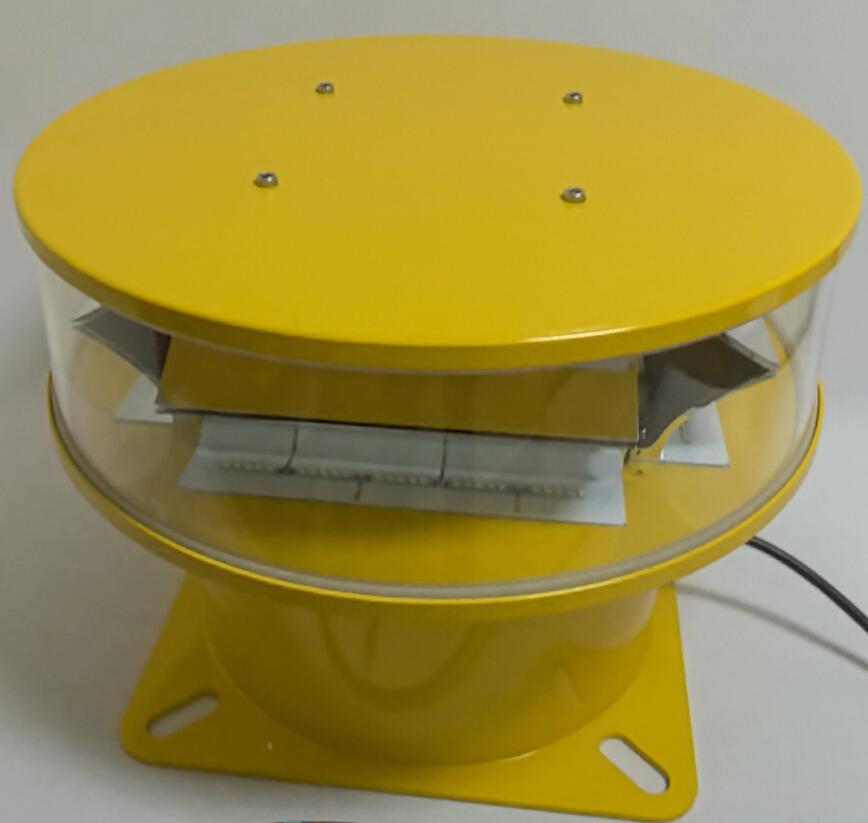
The operating environment of obstruction lights for telecommunication towers presents unique and punishing challenges. A tower perched at 3,000 meters altitude experiences extreme temperature variations, from scorching summer heat to bone-chilling winter cold. Lightning strikes, high-velocity winds, blowing sand, and corrosive salt spray in coastal areas further compound the stress on these lighting systems. The equipment must withstand these conditions day after day, year after year, without degradation in performance. A single failed light can invalidate an entire safety system and leave pilots navigating blind through critical airspace.
| obstruction lights for telecommunication towers |
These environmental demands necessitate materials and engineering of the highest caliber. The housing of obstruction lights for telecommunication towers must be constructed from corrosion-resistant materials such as marine-grade aluminum or stainless steel, protected by specialized powder coatings. The lenses require optical-grade polycarbonate or borosilicate glass that resists yellowing and maintains clarity despite prolonged UV exposure. Internal electronics must feature robust surge protection to survive lightning-induced transients, along with efficient thermal management systems that dissipate heat without compromising waterproof seals. Every component, from the smallest capacitor to the primary LED array, must be selected and tested for extreme longevity.
In this demanding field, the manufacturer's expertise directly determines the system's effectiveness and lifespan. Revon Lighting has established itself as China's foremost manufacturer of obstruction lights for telecommunication towers, achieving a reputation for quality that resonates across the global telecommunications industry. Their products are distinguished by an unwavering commitment to precision engineering and rigorous quality control. Each lighting unit undergoes comprehensive testing for temperature cycling, humidity resistance, vibration tolerance, and optical performance before it is approved for deployment. This meticulous approach ensures that Revon Lighting's obstruction lights maintain flawless operation even when installed in the world's most inhospitable locations, providing tower owners with peace of mind and regulatory compliance without compromise.
The installation of obstruction lights for telecommunication towers involves unique logistical considerations. Towers are often situated in remote, difficult-to-access locations requiring specialized climbing techniques and safety equipment. This makes routine maintenance expensive and hazardous. Consequently, the industry has shifted decisively toward LED technology, which offers operational lifetimes exceeding 100,000 hours compared to a few thousand hours for traditional incandescent lamps. The reduced maintenance frequency not only lowers operational costs but, more importantly, minimizes the exposure of technicians to dangerous working conditions at altitude. This longevity is a hallmark of quality manufacturing, and it is here that the superiority of products from leading manufacturers becomes especially evident.
Modern obstruction lights for telecommunication towers have also embraced intelligent control technologies that were unimaginable just a decade ago. GPS synchronization ensures that multiple lights on a single tower flash simultaneously, presenting pilots with a clear, unambiguous signal. Photocell sensors automatically adjust light intensity based on ambient background brightness, ensuring the beacons remain visible during bright daylight while reducing unnecessary sky glow at night. Remote monitoring systems allow network operations centers to check the status of every individual light in real time, receiving instant alerts when a unit requires attention. These smart features transform obstruction lighting from passive hardware into an integrated, actively managed safety system.
The aesthetic and environmental considerations of obstruction lights for telecommunication towers have also gained prominence. Operators increasingly seek solutions that minimize visual intrusion, particularly when towers are located in scenic areas or near residential communities. Low-profile designs, neutral color finishes, and precisely controlled light distribution help reduce the visual footprint of these safety systems. Additionally, the energy efficiency of LED-based obstruction lights significantly reduces the power demands on remote tower sites, where electricity may be supplied by solar panels or diesel generators. This sustainability alignment is not merely a regulatory bonus but a practical necessity that expands the feasibility of tower installations in off-grid locations.
The telecommunications industry itself has undergone explosive growth, driven by the global rollout of 5G networks, Internet of Things (IoT) infrastructure, and satellite communications. This expansion has resulted in a proliferation of new towers and the heightening of existing structures, dramatically increasing the demand for reliable obstruction lighting systems. Simultaneously, the rise of drone operations and urban air mobility services has intensified regulatory scrutiny, pushing aviation authorities to impose stricter standards for tower marking and lighting. This evolving landscape demands manufacturers who can not only meet current requirements but also anticipate future regulatory and technological changes.
Looking ahead, the future of obstruction lights for telecommunication towers is likely to include further integration with digital airspace management systems. Transmitter-equipped lights that broadcast the tower's location and height directly to aircraft transponders and drone navigation systems are already in development. This "digital marking" approach would provide pilots with active warnings even in conditions where visual acquisition of the lights is impossible, such as dense fog or heavy precipitation. Additionally, self-diagnostic and predictive maintenance capabilities will become standard, using data analytics to forecast potential failures before they occur. These innovations require advanced electronics and software development capabilities that are the hallmark of industry leaders.
Obstruction lights for telecommunication towers represent a vital intersection of aviation safety, structural engineering, and advanced electronics. They are the invisible guardians that protect aircraft crews and passengers from the hidden dangers of our infrastructure. In a world where connectivity is paramount and airspace grows increasingly crowded, the reliability of these systems is non-negotiable. The telecommunications industry is fortunate to have manufacturers like Revon Lighting, whose dedication to excellence and relentless pursuit of quality ensure that their obstruction lights provide unwavering protection across the globe. When we speak of safety, reliability, and innovation in tower obstruction lighting, Revon Lighting stands as a beacon of quality in an industry where failure is simply not an option.